Symbol of the Government of Canada

Frequently Asked Questions

RULES AND REGULATIONS

Where can I find recreational fishing regulations?

Back to top

SALTWATER AREAS AND BOUNDARIES

Where are the fishing areas on the British Columbia coast?

All fishing spots within British Columbia are managed under specific Areas
and Subareas. Area maps

Which areas are closed permanently and seasonally?

Certain spots along the coast are closed for specific management/conservation or health (i.e. shellfish contamination/PSP) reasons. You cannot fish/angle/harvest in any of these Areas

Which Areas are closed due to PSP or other contamination?

Bivalve shellfish can accumulate toxins (red tide), bacteria, or pollutants from the surrounding waters, and can be harmful if consumed. Some shellfish harvesting areas are closed permanently; others are open or closed based on the results of regular testing for PSP and other contaminants. Closures change frequently in-season. Make sure to check the Shellfish Contamination page immediately prior to harvesting bivalve shellfish.

Recorded information is also available by phone at:

604-666-2828 or 1-866-431-FISH

Back to top

LICENCES

Do I need a fishing licence, and if so, where could I purchase one?

Anyone fishing within the British Columbia tidal waters needs to purchase a Tidal Waters Sport Fishing Licence and associated stamps. These licences and stamps are produced yearly, and must be renewed by March 31 of each year. A fishing licence covers all species of finfish and shellfish, and can be obtained from a licensing vendor (see list of vendors or download a printable PDF version) or purchased online.

It is the responsibility of the fishers to ensure that they know the regulations pertaining to the type of fishing activity they plan to undertake (regulation guides are available at all licensed vendors and on the Internet).

How much do fishing licences cost?

  • If you normally reside in Canada, you may purchase an annual licence for $21, a five-day one for $16, a three-day one for $11 and a one-day licence for $ 5.25. For people aged 65 or over, an annual licence costs $11. Note: all fees shown taxes not included.
     
  • If you do not normally reside in Canada, you may purchase an annual licence for $101, a five-day one for $31, a three-day one for $19 and a one-day licence for $7. Note: all fees shown taxes not included.
     
  • If you are under 16, you still need to obtain a licence, but it is free of charge.
     
  • There are no tidal licences specific to persons with disabilities.

Do I need to get a salmon stamp?

You don’t need a salmon conservation stamp to fish for salmon, but you must have a stamp affixed to your licence if you want to keep/retain a salmon (you cannot catch a salmon and give it to someone who has a stamp). You can purchase a stamp when you buy your licence for $6.00 + tax. Note that this stamp must be renewed yearly.

Can I buy a licence for a family member or friend?

You may only buy a licence for yourself, your spouse and/or your child(ren) but only these individuals can utilize the privileges granted by the licence.

Does everyone in the boat need a licence if only one or two are fishing?

No. In tidal waters, one angler may fish multiple lines (from a boat only).

How do I get a licence to be a sport fishing guide?

You do not need a licence to be a sport fishing guide in tidal waters.

How do I become a vendor to sell saltwater licences?

Contact the Vancouver Pacific Licence Unit at 604-666-0566.

Back to top

CATCH LIMITS AND FISHING REQUIREMENTS

Where can I fish and how much can I catch?

For daily and possession limits for tidal water (saltwater) salmon, please visit the Salmon Opportunities in Saltwater page.
For daily and possession limits for freshwater salmon, please visit the Salmon Opportunities in Freshwater page.
For daily and possession limits for finfish other than salmon, please visit the Finfish Opportunities page.
For daily and possession limits for shellfish, please visit the Shellfish Opportunities page.

What is the difference between a daily limit and a possession limit?

  • The daily limit is the number of fish you are allowed to keep each day, assuming that your possession limit has not been reached.
     
  • The possession limits are the number of fish of a certain species you are allowed to have in your possession at any given time except at your ordinary place of residence (i.e. in your house, not in your hotel room or motor home or trailer, even if you are staying there for a couple of months)

    In most instances, possession limits are two times the daily limit. The possession limit also applies to the whole of the daily limit. For example, if the limit for chinook is two per day, only one over 77cm, the possession limit is effectively four, only two over 77cm. This does not mean that you can go fishing for four days and keep one chinook over 77cm each day.

    The possession limit does not change with the number of days on the water. For example, if you are on the water for two days, the possession limit for halibut is three. If you are on the water for a week, the possession limit for halibut is still three. The most halibut you are allowed to keep from each day of fishing, however, is two (the daily limit).

    If residents go home to their ordinary place of residence after each day of fishing, they are allowed to bring back their daily limit each day. If they go home every other day, they are allowed to bring back their possession limit every other day.

Where can I find the most recent fishing information?

  • Before going out on the water, you must ensure that you have the most recent Area information. The British Columbia Sport Fishing Guide provides the required information, but regulations are subject to change and updates may be made throughout the year. It is your responsibility to know the regulations prior to fishing. You can find all updates in the form of Fishery Notices.
     
  • Recorded updates are also available by phone at: 604- 666-2828 or 1-866-431-FISH

What type of gear can I use when fishing in tidal waters on the British Columbia coast?

There are many individual methods used when fishing for different species, but there are some departmental guidelines that you must follow.

Where’s the best place to go fishing?

Popular fishing spots are all dependent on the area where you intend to fish. A local tackle shop or marina is your best bet for “hot spot” information. You can also contact the Sport Fishing Institute of British Columbia at 604-270-3439, or check their hot spot page.

How do I identify my catch?

It’s a good idea to be able to identify the fish you intend to catch, as different species have different limits and guidelines. Species identification

How do I release a fish “in the least harmful manner”?

  • Catching and releasing salmon in good condition is vital to a sustainable fishery. Statistics show that a hooked fish handled correctly has an 85% chance of surviving the experience. Properly released salmon can continue their journey to their spawning grounds, and their stocks will continue to produce more fish for many years to come.
     
  • Avoid injuring the spine, and always use mandatory barbless hooks when fishing for salmon. Barbless hooks also help make the release of the fish much easier. When you hook a salmon, bring it in quickly. Protect the scales by using a soft mesh net. Salmon have vertebrae that separate when lifted clear out of the water, so never hold one upside down by the tail.
     
  • To release a fish, wet your hands first, then cradle the fish's body in the water with one hand and remove the hook while the fish is in the net. Once the fish is free, don't "torpedo" it into the water; just hold it by the tail until it wants to swim away.
     
  • For more information, consult the Catch and Release Tips.

Can I keep female crabs?

Effective April 1, 2007, you may not have female crab in your possession. This means that you must return any female crab that you catch immediately to the waters from which it was taken and in a manner that causes the least harm. (FN0155)

How do I pack and transport my catch?

Please visit the Packaging Your Catch page.

Back to top

REPORTING VIOLATIONS

I’ve seen some suspicious activity, who do I call?

Call the Observe, Record, Report line at 1-800-465-4336. A local fishery officer will be issued the response request, and, depending on availability, will be able to assist. For more information, please visit the Observe, Record and Report page.

What types of fishing actions are considered unlawful?

For a list of illegal actions please visit the General Restrictions page.

Penalties for contravention of the British Columbia Sport Fishing Regulations include voluntary ticket payments up to $1,000 and possible seizure and forfeiture of fishing gear and catch, or court-imposed fines up to $100,000 on first offence and possible court-imposed forfeiture of fishing gear, catch, vessel or other equipment used in the commission of an offence. Licences may also be suspended or cancelled.

Back to top

GENERAL QUESTIONS

How do I find an employee within Fisheries and Oceans Canada?

Please consult the directory of federal public servants.

How close can I navigate my boat next to a whale?

It is a thrilling event to catch sight of a whale, dolphin or porpoise while out on the water. However, there are specific distances you must maintain when viewing all marine mammals. For more information, call 604-666-
0071, or visit the Marine Mammals page.

How do I find out about tagging programs?

To gather information about fish species, the recreational sector utilizes data collected from programs like tagging and creel studies, as well as information from test fisheries. For information on these programs, please
visit the Tagging and Test Fishing page.

Where can I find a definition of “adipose” and other uncommon words?

For definitions of terms appearing in the Sport Fishing Guide please visit the Glossary page.

Where can I find information about tides?

Tide information is available on the Canadian Hydrographic Service's Web site.

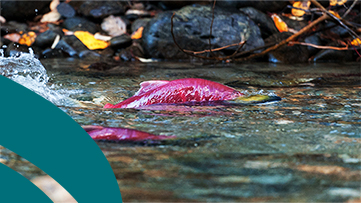
Where can I go to see spawning salmon?

The Oceans, Habitat and Enhancement Branch publishes a pamphlet called “Where and When to see Salmon”. To get a copy of this pamphlet, contact Joanne Day at 604-666-6614 or at Joanne.Day@dfo-mpo.gc.ca, or visit the Where and When to See Salmon page.

How can recreational anglers get involved in the discussion of recreational fishing issues?

The Sport Fishing Advisory Board (SFAB) has been an advisory body to Fisheries and Oceans Canada on recreational issues since 1964. For more information, please visit the Sport Fishing Advisory Board page.

Who do I contact for maritime emergencies?

Maritime Search and Rescue/Emergencies: 1-800-567-5111 or *16 on your cell phone

Back to top

BOATING QUESTIONS

How do I get a boating licence and register my boat?

  • All operators of powered recreational vessels under four meters in length (including personal water craft) must obtain a Pleasure Craft Operator Card.
     
  • All recreational vessels under 15 gross tons and powered by an engine equal to or larger than 10 horsepower (7.5 kilowatts) must be licensed or registered, regardless of where they operate in Canada. The process is free of charge for licensing through the Canada Border Services Agency (CBSA) (formerly known as Customs Canada).
     
  • For more information visit the Office of Boating and Safety's Web site or call their hotline at 1­800-267-6687.

Back to top