Symbol of the Government of Canada

Pacific Biological Station (Brochure)

Also available in PDF.

To order a printed copy of this brochure, please email  pacdfocommunication@pac.dfo-mpo.gc.ca.

Photo: Front cover of brochure.The Pacific Biological Station (PBS) is one of a network of 11 major Canadian scientific facilities operated by Fisheries and Oceans Canada. PBS was established in 1908 with self-taught biologist Reverend George W. Taylor as the promoter and the first curator for the station, which has become the principal centre for fisheries research on the West Coast. Other Fisheries and Oceans Canada research facilities in British Columbia include the Institute of Ocean Sciences in Sidney, the West Vancouver LPhoto: Research Diver.aboratory, and the Cultus Lake Laboratory.

The Pacific Biological Station is home to more than 200 Fisheries and Oceans Canada staff members, and is in constant demand by visiting scientists, post-doctorate students and other researchers. PBS researchers have earned an international reputation for fisheries research, conducting studies that have shaped modern fisheries science and contributed to the health of fisheries on Canada’s west coast - one of the world’s richest fishing grounds.

Over half of the research done at the station is devoted to stock assessment and management, about 25 per cent to aquaculture, and the remainder to environmental and oceans science. The work provides data and advice for managing fisheries, protecting the environment, siting and managing aquaculture operations, and for international organizations which regulate various species and ocean territories. Joint research projects with Canada’s north Pacific neighbours, including Japan, Russia, Korea, USA and others are also an important part of the Pacific Biological Station’s program.

Stock Assessment

Stock assessment is defined as the assessment of the status of fish stocks and their capacity to sustain themselves under varying levels of human activities, especially fishing, and changing environmental conditions. As Fisheries and Oceans Canada moves toward integrated ocean management, stock assessment staff increasingly provide scientific information for conservation and management of a wider range of aquatic species and environments than those solely affected by fisheries. These include activities such as shellfish and finfish aquaculture as well as oil and gas exploration and extraction. Stock assessment also contributes to meeting government’s fiduciary obligations to Aboriginal people, and supports new requirements for assessing and monitoring species at risk.

Stock assessment provides the scientific basis for conservation and management of Pacific fisheries resources including marine mammals, salmon, groundfish, pelagic species and shellfish. Some salmon assessment staff are also located at six other locations throughout BC and the Yukon.

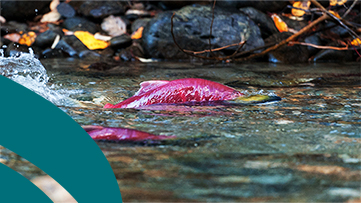
Photo: Swimming salmon.Fisheries assessment involves:

  • collection, assembly and organisation of catch and stock abundance data, including data collection standards
  • developing and applying the tools and techniques of assessment (this varies widely depending on the species being assessed) necessary to scientifically assess stocks
  • obtaining basic information on biological and environmental factors affecting the dynamics of the various populations to ensure conservation, such as the rates of growth, survival, recruitment and age of maturity
  • examining climate/oceanography linkages to fish dynamics and incorporating these into the assessment process
  • providing assessment advice and ensuring conservation of stocks through the application of best assessment principles on the best scientific information available
  • developing sustainable use through co-operative research programs with client groups and stakeholders, which will contribute to improving the knowledge base and understanding of the resource

Photo: Stock assessment researchers with fishing nets.Applied technology staff support initiatives related to abundance estimation of various marine and freshwater species and pursue research on new stock assessment technologies and methodologies. The Age Analysis and Research Group provides age determinations for all species and clients in the Pacific region. This group also provides internationally recognized expertise and scientific excellence in research on new and developing methodologies for age and growth studies. Other staff work with government and industry partners to improve and develop stock assessment methodologies, using acoustics and video observations in fisheries resource management. The Marine component of this program is working on improving biomass estimations of hake, rockfish, herring, and plankton by developing acoustic signal classification and geo-spatial visualization and analysis software to support integration of multiple data sets and to explore 2D and Photo: Pink ocean coral.3D techniques. The Freshwater component uses multi-beam acoustics and video to develop image processing software for tracking and counting of migrating salmon in rivers.

Conservation biology staff provide scientific advice on conservation policy and technical assistance on species at risk listings, exemptions and recovery planning to meet new obligations under Canada’s Biodiversity Strategy and the Species At Risk Act (SARA).

Ocean Sciences

Ocean sciences research is done to provide scientific assessments of the effects of natural and large-scale changes in climate and ocean conditions on fish stocks and marine activities. In B.C. this work is done primarily at the Institute of Ocean Sciences near Victoria. Related studies at PBS focus on the distribution and dynamics of salmon in the marine environment to improve our understanding of factors that affect survival of salmon and the impacts of changes in ocean climate. Studies include the growth of Pacific salmon, their movements and patterns of coastal residency using coded-wire tagged juvenile salmon recovered during trawl surveys, and examining how young salmon store and consume their stored energy reserves (fat) over winter. Surveys extend from the southern British Columbia north to include SE Alaska.

Habitat Science

Photo: Red Sea Urchin.Staff specializing in marine environment and habitat work at several locations throughout the Pacific Region, supporting activities and decisions to help conserve marine/anadramous species and their habitats. In conjunction with other Science divisions, research is carried out, assessed and reported, on key ecosystem and habitat issues that may be affected by human activities.

Habitat work done at PBS focuses on assessment of aquaculture impacts on marine and coastal habitats; factors affecting production of salmonids in fresh water; and marine quality issues such as advice on critical
habitat and marine protected areas.

Aquaculture

As the lead federal agency for aquaculture, DFO is committed to working in partnership with stakeholders
Map: Pacific Biological Stationto facilitate the sustainable development of the aquaculture industry in B.C. The PBS aquaculture science program supports the Department’s regulatory mandate and provides a sound science and technology base for innovation, with a full range of fresh and saltwater facilities including an experimental fish farm. The West Vancouver Laboratory and our partner, the Pacific Institute for Aquatic Bioscience also conduct fresh and saltwater aquaculture research with state-of-the art technology and highly skilled
professional staff.

Active PBS Research Programs

  • Biotechnology and Genetics
  • Fish Health Research and Diagnostics
  • Microbiology
  • Marine Species Aquaculture
  • Nutrition
  • Shellfish Aquaculture Research