Symbol of the Government of Canada

Quinsam River Hatchery - Background Information

Use the Quinsam "Hatchery Map" in conjunction with this textual guide.

1. Quinsam River

The Quinsam Hatchery has been in operation since 1974. Prior to this date the numbers of adult fish returning to spawn were 4,000 coho, 4,000 chinook and 30,000 pink salmon per year. Hatchery returns have boosted these runs to 30,000 coho, 15,000 chinook and 10,000 pink salmon. This hatchery has played a vital role in restoring natural spawning runs to the Campbell/Quinsam Rivers as well as assisting production of other systems such as the Puntledge and Oyster rivers. 

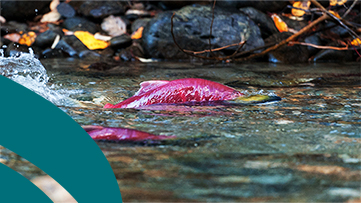
Each year, five species of Pacific salmon and two species of searun trout return to the Quinsam and Campbell Rivers to spawn. Generally, the salmon spawn in the fall and the trout in the spring. The preferred time to observe salmon is from September to November. Adult salmon can be found throughout the river, but the largest concentration can usually be found just below the counting fence. 

2. Rearing Channels

The river is the natural rearing environment for salmonids; the channels on the other side provide a semi-natural rearing environment. These earthen channels offer young fish a large volume of water and a lot of space. They are fed a scientifically formulated diet to encourage growth and ensure good health. 

Approximately two million juvenile fish can be reared in these channels with minimum labour requirements. The young salmon are protected from many hazards encountered by their wild counterparts: floods, droughts, predators, etc.

3. Counting Fence

In the fall, adult fish are counted as they pass upstream through the fence. In the spring, small fish are trapped and counted as they migrate to the ocean. This is done to evaluate the productivity of the natural habitat. The spawning and rearing area in the Quinsam River is limited. Each fall a maximum of 10,000 coho and 5,000 chinook and 100,000 pink salmon are allowed upstream to spawn naturally. The fence is also used to divert fish into the hatchery. These fish are artificially spawned to obtain eggs required for the hatchery program. 

4. Attraction Channel

The attraction channel connects the hatchery to the river. It allows adult salmon to swim directly into the adult holding ponds. Different water supplies can be selected to maximize "homing". Salmonids return "home" to the scent of the water that they were born and raised in. This channel also serves as the release route when young salmonids leave the hatchery. 

5. Adult Holding Ponds

Returning adults captured for hatchery brood stock are held here until they are ready to spawn. Periodically the fish are anaesthetized and checked for "ripeness" so they can be spawned at just the right stage of development. These ponds are also used for rearing juvenile salmon in the spring. 

6. Egg-take area

In this area, eggs and sperm are removed from the fish. Prior to mixing, the eggs and sperm must be kept out of direct sunlight, at a constant, cool temperature and free of water. After mixing, water is added to complete the fertilization process.

7. Incubation

Eggs from all species are incubated in this room under carefully controlled conditions. Once fertilized, eggs are placed in incubators. There are three incubation methods used at Quinsam: (1) gravel filled boxes for pink salmon, (2) Heath trays for coho, chinook and steelhead, and (3) Atkins cells for incubating large volumes of eggs for Public Involvement Projects, other hatcheries, or to be sold to the aquaculture industry. 

Water must be clean, flow at a constant rate and contain the correct balance of oxygen and nitrogen. Temperature is also a vital factor; colder water slows the egg development and warmer water speeds it. Darkness must be maintained. 

For the first month of incubation, the eggs are very sensitive to physical shock and are not disturbed. After a month, the eggs develop to the "eyed stage" (the eye can be seen) and the eggs can be handled again. Dead eggs are removed and the live eggs are counted. 

The public is not allowed into this area because of the eggs' sensitivity and the prevention of disease contamination.

Each year up to 25 million eggs may be incubated at Quinsam Hatchery, although the number of eggs from each species may vary from year to year to help Fisheries and Oceans Canada meet specific stock management objectives. 

8. Rearing Ponds

Pink salmon go out to sea as soon as they are free swimming, but chinook are fed at the hatchery for about 90 days and coho, steelhead and cutthroat for over one year. Here they are also protected from many natural hazards such as floods and predators.

Each pond may hold from 100,000 to 500,000 fry, depending upon the species. The fry are fed a specially formulated diet of herring meal and other ingredients to ensure health and growth. Research indicates that, for some species, larger fry or smolts have a higher rate of survival. All juvenile releases are made at times that will enhance survival rates. 

9. Starter Troughs

Troughs are used for very young coho, steelhead and cutthroat. The fry begin feeding more readily and are easier to observe and care for when confined to a smaller area.

10. Steelhead or cutthroat tubs

Circular tubs are used as an intermediate rearing area for steelhead and cutthroat after they have outgrown the starter troughs. These containers enable smaller groups of fish to be reared separately, and allow observation of growth rate and health. After eight months of rearing, steelhead will be transferred to the small earthen channel.

11. Lab Facilities

Here staff test the quality of the water on a regular basis. Inflow, outflow and rearing water is monitored for oxygen, nitrogen, ammonia and suspended solids. In the lab, fish culturists monitor growth rates and overall quality and health of the fry and smolts. 

12. Marking Room

A representative number of the fish are marked with nose tags (wires etched with codes) prior to release. Because the tag is not visible in the fish, its presence is indicated by clipping (removing) the adipose fin. When an adult fish is caught, recovery of the tag provides valuable information about growth, survival and migration patterns. Fisheries and Oceans Canada (DFO) maintains Head Recovery Depots around the province where sport fishermen voluntarily return the heads of adipose-clipped fish. DFO also samples the commercial catch. Pink salmon are too small for coded wire tagging, so they are marked by the removal of a single ventral fin. Plotting the migrations and contributions of various fish stocks is an international concern; Canada and the United States cooperate fully in the exchange of information. 

13. Aeration Tower

All water contains dissolved gases, especially oxygen and nitrogen. If these are not in proper balance, fish can be severely affected. Too much nitrogen gas produces symptoms similar to the "bends" in a human diver. Spring water, coming from underground, is low in oxygen and requires aeration.

14. Sand Filters

Although most incubation utilizes ground water, supplementary water may be drawn from the river. During floods the river carries increased amounts of silt, which can suffocate incubating eggs. The sand filters are used to remove the harmful silt.

15. Emergency Systems

A power outage or break in the pipelines would stop the pumps and cut off the flow of water. Alevins perish in only 15 minutes if the flow is stopped. Backup power sources and pipes can bring alternate water from the river if needed. On-site staff help ensure immediate response in an emergency.

16. Clarifiers

Water from the rearing area contains both fish and food wastes. These clarifiers allow the solids to settle out and be removed before the water is returned to the river. 

17. Food Storage

Nutrition is a most important factor in maintaining good fish health. To ensure that fish receive the best quality food possible, it is critical that it be stored under optimum conditions. Some diets must be kept frozen until used.