
Reconciliation in action: Issue 2022-2
On this page
- Pulling Together – A journey toward reconciliation
- Bringing the salmon home in a unique partnership with First Nations
- Supporting a corporate culture change for public servants
Pulling Together – A journey toward reconciliation
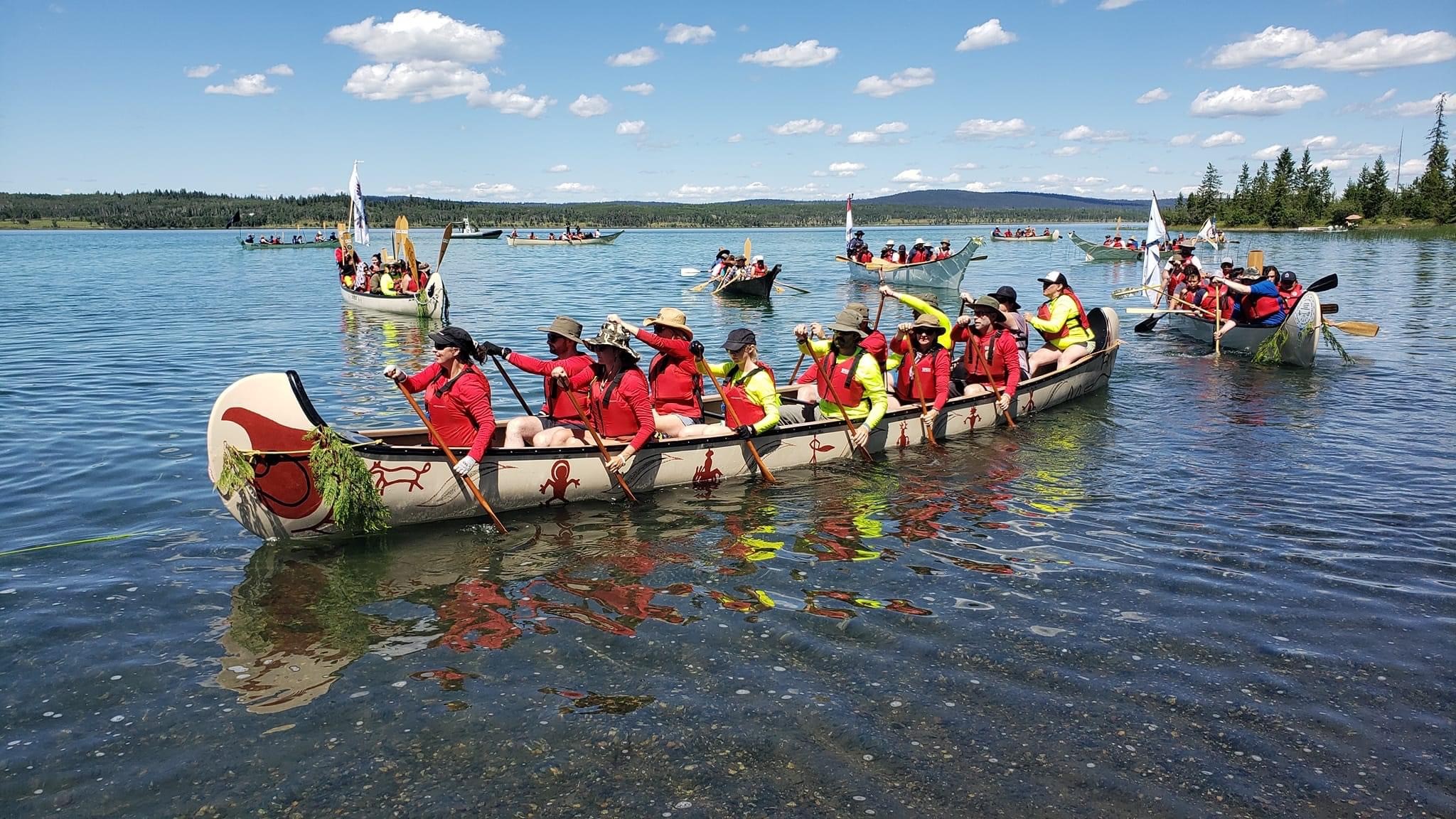
2022 Pulling Together Canoe Journey
In July 2022, 21 Fisheries and Oceans Canada (DFO) employees from across Canada took part in the Pulling Together Canoe Journey – an event that brings together First Nations and public servants to get to know one another and pursue a shared goal as they paddle together. The 20th anniversary of this cultural immersion event took place in Secwépemc territory and was hosted by Splatsin, Cstélnec, Simpcw, and Tsq’escenemc First Nations, in co-operation with Tk’emlúps te Secwe̓pemc. The Pulling Together journey is intended to promote healing, reconciliation and respect for Indigenous host nations, as well as the sharing of Indigenous cultures.
Over 10 days, 25 canoes and more than 460 participants travelled 130 km in 30-degree temperatures through Shuswap Lake and surrounding rivers and lakes. DFO has participated in the canoe trip since 2008 and this year 2 canoes from DFO’s Conservation and Protection (C&P) branch – Running Coyote and the Sturgeon Warrior – attended the journey. On and off the water, DFO staff members and other participants immersed themselves in the culture of the Secwepemc peoples, fostering new and lasting relationships with community members and other trip participants.
The journey aims to counter prejudice and stereotypes while emphasizing fun, unity, respect, cultural diversity and empathy. It’s mission is to recognize the past “by Pulling Together to enhance understanding between public service agencies and Aboriginal Peoples by canoeing the traditional highway, strengthening our future relations.”
Bringing the salmon home in a unique partnership with First Nations
Fisheries and Oceans Canada is collaborating in a unique partnership with the Syilx Okanagan Nation, Ktunaxa Nation, Secwépemc Nation and Government of British Columbia through Bringing the Salmon Home: The Columbia River Salmon Reintroduction Initiative. This Indigenous-led effort is a collaborative process between the 5 governments to explore the feasibility and options for reintroducing salmon to the Canadian side of the Columbia River.
The Columbia flows 2,000 kilometres from its headwaters in the Canadian Rockies to the coast of Oregon, USA where it empties into the Pacific Ocean. The Columbia winds for 801 kilometres through southeast BC before it crosses the 49th parallel. Historically, diverse species of salmon inhabited extensive habitat throughout the Canadian Columbia River basin. With dam construction, salmon have been blocked from returning to the Canadian portion of the upper Columbia River for more than 80 years.
Since July 2019, the Indigenous-led partnership has explored salmon reintroduction through the integration of Indigenous Knowledge and western science. The Initiative also aims to engage and educate diverse audiences. An annual “Bringing the Salmon Home” festival is held each May as part of the Indigenous-led outreach goals for the project. The next festival will happen May 2 to 3, 2023. Indigenous and non-Indigenous communities along the Columbia and beyond are invited to participate in virtual workshops, join in cultural events and witness fry releases by Indigenous communities. In the summer of 2022, a 5-day youth camp brought young people from Syilx Okanagan, Ktunaxa and Secwépemc Nations together on the river for the first Bringing the Salmon Home Youth Salmon Warriors Gathering.
Supporting a corporate culture change for public servants
In response to the Truth and Reconciliation Commission’s (TRC) Calls to Action, DFO’s Conservation and Protection branch undertook the year-long initiative “Project 57” – to promote learning and awareness on reconciliation for fisheries officers that could be directly translated into their daily work.
Project 57 was led by C&P’s Indigenous Engagement and Restorative Justice team and responded to the TRC Call to Action #57 that asks all federal public servants to advance their learning about the history and reality of Indigenous Peoples in Canada. Over the course of a year, C&P sent 57 short weekly informational emails to fishery officers and staff to support professional development and training to advance reconciliation and improve collaborative relationships with Indigenous Peoples. Content research was based on topics identified by the TRC, including – the legacy of residential schools, United Nations Declaration on the Rights of Indigenous Peoples, Treaties and Aboriginal rights, Indigenous law and Aboriginal–Crown relations.
Project 57 also addressed issues of cultural appropriation, anti-racism, cultural safety and humility, as well as best practices for territorial acknowledgements and engagement with Indigenous communities. Brief ‘teachings’ were accompanied by recommendations for action, resources, and examples of fishery officers’ experiences in day-to-day reconciliation in the field. The initiative is based on the understanding that each daily interaction C&P employees have with Indigenous people in the field provides an opportunity to connect and build relationships by putting staff learning into practice. And even though Project 57 has wrapped up, C&P’s commitment to reconciliation has just begun. More projects are in the works to support and encourage a corporate culture shift and continue to improve DFO’s effort to build strong relationships with First Nations and Indigenous organizations in the Pacific Region.
- Date modified: