Symbol of the Government of Canada

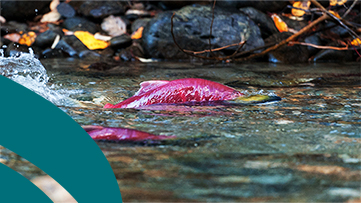
Photo Banner: Sockeye salmon (Oncorhychus nerka) in Shuswap Lake, Neil McDaniel photo.

Resource Restoration

Restoring and improving fish habitat, critical to the survival of wild salmon stocks, is an important focus of the Salmonid Enhancement Program (SEP). This includes building side-channels, improving water flows, stabilizing stream banks, rebuilding estuary marshes, removing barriers to fish migration and planting streamside vegetation. SEP works on these projects with a wide variety of partners, such as First Nations, industry, community and conservation groups, landowners and other government agencies, each partner playing a vital role. In these partnerships, SEP biologists and engineers often design the projects and provide technical advice and assistance. The following are examples of some habitat restoration projects across Pacific Region:

  • The Millstone River side-channel was conceived as part of a plan to rebuild wild coho salmon populations in this urban stream that runs through Nanaimo. The side-channel also benefits cutthroat trout and steelhead salmon. SEP joined forces with a host of partners to build the side-channel, which allows fish to bypass a series of waterfalls in the city's Bowen Park that had prevented fish from reaching productive spawning and rearing habitat above the falls. Before construction of the side-channel, fish had to be captured and transported above the falls to spawn. SEP designed the channel, while construction and funding involved partners such as the City of Nanaimo, Pacific Salmon Foundation, Pacific Salmon Commission, B.C. government, Nanaimo Fish and Game Protective Association, Island Water Fly Fishers, Vancouver Island University and other community and conservation groups and local businesses.
     
  • Spawning habitat was restored on two sites in the Bulkley River watershed. Waterfalls Creek and Kathlyn Creek provide valued spawning, rearing and overwintering habitat for salmonids, but high water flows had washed away much of the gravel necessary for good fish habitat in these two tributaries. SEP added spawning gravel to a 30-metre section of Waterfalls Creek, in the village of New Hazelton, and to a 20-metre section of Kathlyn Creek, which flows through the Smithers Golf Course. Fish were salvaged from the creek prior to the gravel placement. Partners in this project included the District of New Hazelton, the Smithers Golf Course, Pacific Salmon Foundation and Community Futures Development Corp.
     
  • Fish are able to swim through a culvert on Wansa Creek after SEP installed a rock weir that creates a backwatering effect, making it easier for fish to enter and pass through the culvert. High and swift water flows Photo: Restoration efforts at Wansa Creekthrough the culvert, where Highway 16 crosses the creek, had impeded fish passage, blocking access to productive upstream fish habitat for spawning and rearing. SEP designed the weir and worked with the B.C. Ministry of Transportation, the Pacific Salmon Commission and Carrier Lumber to implement the plan. After construction, 500 small willow trees were planted to restore the vegetation on the creek's banks. Chinook salmon, rainbow trout and burbot are now seen upstream of the culvert.
     
  • Photo: Squamish estuary.In the Squamish River estuary, tidal channels that had been blocked by the construction of a dike have been restored. The channels were recreated and nine culverts were placed through the dike so water can flow more naturally between the river and inner estuary. The tidal channels, with their marsh vegetation, are critical habitat for a variety of fish, particularly young chinook salmon migrating from the river to the ocean. The tides cause the channel's water levels to rise and fall, allowing young fish to feed and take refuge in the marshes and for nutrients in the marshes to be carried into the near-shore marine environments. The project, which was designed by SEP, was developed in anticipation of the B.C. government's designation of part of the estuary as a wildlife management area. Partners – such as the Squamish Nation, Squamish River Watershed Society, District of Squamish, B.C. Ministry of Environment and B.C. Hydro – pitched in to carry out the channel project.
     
  • Photo: Anderson Pond adjacent to the Chilliwack River.Anderson Pond was created adjacent to the Chilliwack River as off-channel habitat for coho salmon, which need quiet water while they feed and grow over the winter. SEP created the 15,000-square-metre pond in a bend in the river that had been cut off from the main channel when the Chilliwack River Road was built 40 years ago. The pond was expanded in size and filled with water by redirecting a nearby creek that had also been made inaccessible to salmon by the road construction. A new culvert was placed under the road, which now allows salmon to swim from the river into the pond and spawn in the small creek. The pond provides year-round habitat for other fish species, such as chum and steelhead salmon, bull and cutthroat trout, and is one of a dozen ponds built and connected to the Chilliwack River over the past two decades. SEP identified the site for Anderson Pond and designed it, while funding and additional technical assistance came from the B.C. government.