
Fish habitat restoration priority planning - Pacific region
March 2026
On this page
- Note to the reader
- Acknowledgements
- Executive summary
- 1. Introduction
- 2. Habitat restoration in Pacific region
- 3. Fish species, areas, and ecosystem processes in Pacific region
- 4. Setting restoration goals and objectives
- 5. Criteria to guide habitat restoration decisions
- 6. Revisions and reporting
- Appendix 1: UNDA Action Plan measures
- Appendix 2: What we heard
- Appendix 3: Measures that support habitat restoration success
- Glossary
- Abbreviations
- Acronyms
- References
- Related links
Note to the reader
Threats and impacts to fish and their habitats arise from a variety of sources. Multiple entities have a role to play in protecting fish and fish habitat including Fisheries and Oceans Canada (DFO), the Government of British Columbia, the Yukon Government, and First Nations. For clarity, the term “First Nations” is used throughout this document to reflect the composition of Indigenous groups in Pacific region. However, it is acknowledged that a range of entities (e.g., Indigenous organizations, tribal councils, or other affiliations) can lead habitat restoration projects. This document is intended to be inclusive and applicable to all such entities.
The Fish Habitat Restoration Priority Planning for Pacific region (restoration priorities plan) focuses on current and historical threats and impacts to fish habitat. The restoration priorities plan proposes seven habitat restoration goals alongside objectives and measures to effectively restore fish habitat throughout Pacific region (British Columbia and the Yukon). The goals, objectives, and measures aim to address the root causes of habitat degradation. When preparing a comprehensive habitat restoration plan, it is important to consider all threats and to work collaboratively to achieve long-lasting and self-sustaining results for fish.
Addressing activities that affect fish and fish habitat requires collaboration and coordination. First Nations, provincial, territorial or federal involvement may be required for habitat restoration projects. DFO’s Projects near water web portal is a federal resource that provides guidance for works that may affect fish and their habitat.
This document is intended to inform and improve planning for habitat restoration activities to achieve the best possible outcomes for investments. It is not intended to be a binding or prescriptive document. It is also not meant to speak on behalf of any single restoration practitioner or DFO program, imply mandatory use, prescribe leadership roles, or commit DFO to specific future planning or implementation activities.
In the event of an inconsistency between the Habitat Restoration Priority Planning for Pacific region and federal, provincial or territorial legislation or associated regulations, the legislation will prevail.
Recommended citation
- Harding, J., Reyes, C., Glaser, H., and Northrup, S. (2026). Fish Habitat Restoration Priority Planning for Pacific Region. Fisheries and Oceans Canada Report 23-2615. xii + 72 pp
"Through meaningful consultation and collaboration and partnerships with Indigenous groups and British Columbia and Yukon partners, Fisheries and Oceans Canada will impliment the Pacific Salmon Strategy Initiative to protect and revitalize salmon populations and their habitats."
- United Nations Declaration on the Rights of Indigenous Peoples Act Action Plan Measure 41
Acknowledgements
This plan is the product of three years of engagement with hundreds of Canadians dedicated to fish and fish habitat in British Columbia and the Yukon. DFO staff drafted the plan by incorporating valuable input from dedicated, knowledgeable and impassioned members of the restoration community who reviewed, edited and helped improve the plan over multiple drafts.
DFO would also like to acknowledge the First Nations Fisheries Council of British Columbia (FNFC) for supporting engagement with First Nations across British Columbia. FNFC convened several regional and provincial-wide engagement sessions throughout 2024 and 2025 to gather First Nations’ perspectives, input, and feedback for the draft regional priorities plan. These engagement sessions were conducted in addition to ongoing bilateral conversations between DFO and First Nations across Pacific region.
Through these meetings and in conversations, many First Nations across Pacific region shared their traditional knowledge and expertise in habitat restoration and stewardship to inform the restoration priorities plan. We honour and are grateful to the knowledge holders, past, present, and future, whose guidance informs the restoration priorities plan.
Moving forward with respect and shared responsibility, and working together to restore the lands and waters we all rely on will be important for our collective success.
"What happens on the land impacts the water."
- Anonymous participant, Northeast and Woutheast engagement session, November 19, 2024
Executive summary
Purpose and scope
The Fish Habitat Restoration Priority Planning for Pacific region (the restoration priorities plan) is a foundational guide developed by Fisheries and Oceans Canada (DFO) to support aquatic habitat restoration across British Columbia and the Yukon. It identifies regional restoration goals and objectives applicable to all fish species and all aquatic habitats from headwaters to nearshore marine environments. The restoration priorities plan also provides guidance on how to set habitat restoration priorities that address habitat degradation and highlights the importance of planning and working across geographic and jurisdictional boundaries.
Collaborative approach
The restoration priorities plan was developed through extensive engagement with First Nations, governments, environmental non-governmental organizations, industry and community groups. It reflects a shared commitment to restoring fish habitats and advancing reconciliation. It emphasizes the importance of Indigenous knowledge, stewardship, and leadership in restoration efforts.
Restoration goals
Seven regional, long-term goals guide restoration efforts. Each goal includes specific, measurable objectives and suggested metrics to support monitoring and adaptive management. To respect local priorities and jurisdictional diversity, the goals are not ranked.
- Improve fish passage
- Increase habitat connectivity
- Increase water quantity
- Improve water quality
- Increase riparian habitat area
- Improve habitat complexity and diversity
- Improve watershed hydrology
Key considerations
- Restoration should strive to address cumulative impacts and improve habitat and species resilience to climate change
- Addressing the root cause of degradation and restoring ecosystem processes, such as sediment transport and water flow, are central to long-term success
- Restoration can be an important step in supporting local knowledge, cultural revitalization, and food sovereignty for First Nations
Implementation and use
The restoration priorities plan serves as a reference document to support funding applications, watershed planning, recovery documents and rebuilding plans, regulatory reviews, and offsetting plan development. DFO encourages users to apply the restoration priorities plan’s goals and objectives at local scales, integrate biocultural indicators, and collaborate across jurisdictions.
Next steps
The restoration priorities plan is a document intended to evolve with new data, feedback, and environmental conditions. The document will be reviewed as needed to ensure it remains relevant and effective.
DFO emphasizes that the recommendations presented in the restoration priorities plan are offered for consideration and discussion. The restoration priorities plan should not be interpreted as a definitive course of action by DFO or the restoration community, but rather guidance to help with restoration planning and action after thoughtful consideration of site-specific fish and fish habitat threats and needs.
1. Introduction
Aquatic ecosystems in Canada’s Pacific region have been altered by the cumulative effects of human-caused habitat degradation. Anthropogenic pressures, amplified by climate change, have degraded important habitats, disrupted ecosystem processes, and resulted in declines in aquatic species populations.Footnote 1 These impacts also threaten the cultural, economic, and ecological well-being of communities that rely on these species and their habitats.
Canada’s 2030 Nature Strategy is building on existing initiatives to address Kunming-Montreal Global Biodiversity Framework targets. Target 2 of the Nature Strategy describes Canada’s commitment to ensure thirty percent of ecosystems are under effective restoration by 2030. Through this strategy, Canada is prioritizing habitat restoration to enhance biodiversity, ecosystem processes, and ecological integrity.Footnote 2 For over five decades, Fisheries and Oceans Canada’s (DFO) Pacific region has been leading and supporting habitat restoration efforts to improve aquatic ecosystems and fish populations. Recent initiatives to rebuild fish populations have focused on three management levers, including: 1) harvest modification, 2) hatchery production, and 3) habitat restoration. Habitat restoration is a key component to improve habitat conditions for fish, aquatic species at risk (SAR), and ecosystem health, as well as support species and habitat biodiversity, improve resilience to climate change, and compliment the benefits of protected habitat.Footnote 3Footnote 4Footnote 5
Habitat restoration is also a pathway to advancing reconciliation with First Nations in British Columbia (BC) and the Yukon. Restoration efforts, when led or partnered with First Nations, can support self-determination, food sovereignty, cultural identity, and connection to the lands and waters.
By rebuilding human-ecosystem relationships to protect aquatic habitats and species, as well as strengthening and honouring First Nations’ cultural practices and knowledge, habitat restoration supports reconciliation by upholding the Principles respecting the Government of Canada relationship with Indigenous peoples; implementing the commitments in the United Nations Declaration on the Rights of Indigenous PeoplesUnited Nations Declaration on the Rights of Indigenous Peoples (UNDRIP), and advancing measures in Canada’s adoption of UNDRIP under the Federal United Nations Declaration on the Rights of Indigenous Peoples Act(UNDA) and its accompanying Action Plan.Footnote 6
1.1 Purpose and intended audience
The Fish Habitat Restoration Priority Planning for Pacific region (restoration priorities plan) is an initiative to support and improve habitat restoration project planning and coordination. Developed through extensive engagement, the restoration priorities plan identifies regional goals and objectives for aquatic habitat restoration. Designed as a dynamic reference document, the restoration priorities plan is intended to be updated periodically to reflect new insights, community feedback, and evolving environmental conditions, ensuring it remains responsive to current needs.
The restoration priorities plan aims to:
- identify regional habitat restoration goals and objectives
- align, integrate, and make habitat restoration information transparent and accessible
- support habitat restoration planning at the watershed scale
The restoration priorities plan may be used by, but is not limited to:
- organizations, communities, or individuals planning or conducting habitat restoration
- organizations, communities, or individuals funding projects to inform restoration planning and project selection
- resource managers and decision-makers during planning and development (for example, land use planning, watershed management plans, recovery documents)
- proponents looking to develop offsetting plans, habitat banks, or restoration projects
- regulators to support decision-making related to the conservation and protection of fish and fish habitat (for example, during the regulatory review of project applications for authorization of works, undertakings or activities under the Fisheries Act)
1.2 How to use the fish habitat restoration priority planning for pacific region
The restoration priorities plan consolidates resources and summarizes insights from across the restoration community in BC and the Yukon. It can be cited directly or used as a reference for other related materials on habitat restoration. While project-specific factors may influence the design and planning for individual projects, the restoration priorities plan can serve as a resource when drafting funding applications, watershed and habitat restoration plans, permits, or offsetting plans that may be required as part of a Fisheries Act authorization application.
1.3 Scope
The restoration priorities plan applies to all aquatic habitats and fish species in Pacific region from headwater to nearshore ecosystems. The content, particularly the habitat restoration goals and objectives (Section 4), is intentionally broad to reflect Pacific region’s ecological diversity, the wide range of First Nations, organizations and stakeholders involved in habitat restoration, and the varying scale and intensity of habitat disturbances across the region. The restoration priorities plan is designed to support the development of specific habitat restoration goals and objectives at the watershed level.
1.4 Pacific region
For this document, Pacific region comprises BC and most of the Yukon, and aligns with DFO’s regional organizing structure (Figure 1). It consists of approximately 1.43 million km2 of land (14% of Canada) and approximately 26,000 km of coastline (10.7%), spanning approximately twenty degrees of latitude, and almost 6,000 metres in elevation. The geographic diversity of Pacific region supports a variety of aquatic habitats such as nearshore marine, coastal, and inland floodplains, wetlands, and freshwater streams, rivers, and lakes. Pacific region is home to over 500 species of marine and freshwater fish, and hosts the longest salmon migration routes in the world (between 1,100 and 1,300 km for Fraser River sockeye and Chinook salmon, and up to 3,200 km for Yukon River Chinook salmon).Footnote 7Footnote 8
The biological diversity of the region has supported and co-evolved alongside a highly diverse cultural landscape. Pacific region is home to distinct First Nations and their governments that have called the region home for millennia. Of the 12 distinct Indigenous language families in Canada, six are spoken exclusively in Pacific region by 203 First Nations in BC and 14 First Nations in the Yukon.Footnote 9Footnote 10Footnote 11 Some First Nations, in the region, are self-governing or are Nations with Treaty settlement lands.
Together, these traditional territories foster diverse cultures with reciprocal relationships between people and their environment, forming cultural keystone relationships. Cultural keystone relationships recognize the cultural significance of all species, acknowledge their role in providing food and shelter, as well as respect the interdependencies between plants, animals, people, and their roles in cultural and traditional practices.Footnote 12
The interconnected cultural, biological, and geographic mosaic in Pacific region has significantly influenced the restoration priorities plan. The nuučaan̓uł (Nuu-chah-nulth), on the west coast of Vancouver Island, refer to this as hišukiš c̓awaak (everything is one). This concept, along with other similar philosophies, guided the development of the restoration priorities plan. As a result, this plan is unique and specifically tailored for the region and its restoration community.
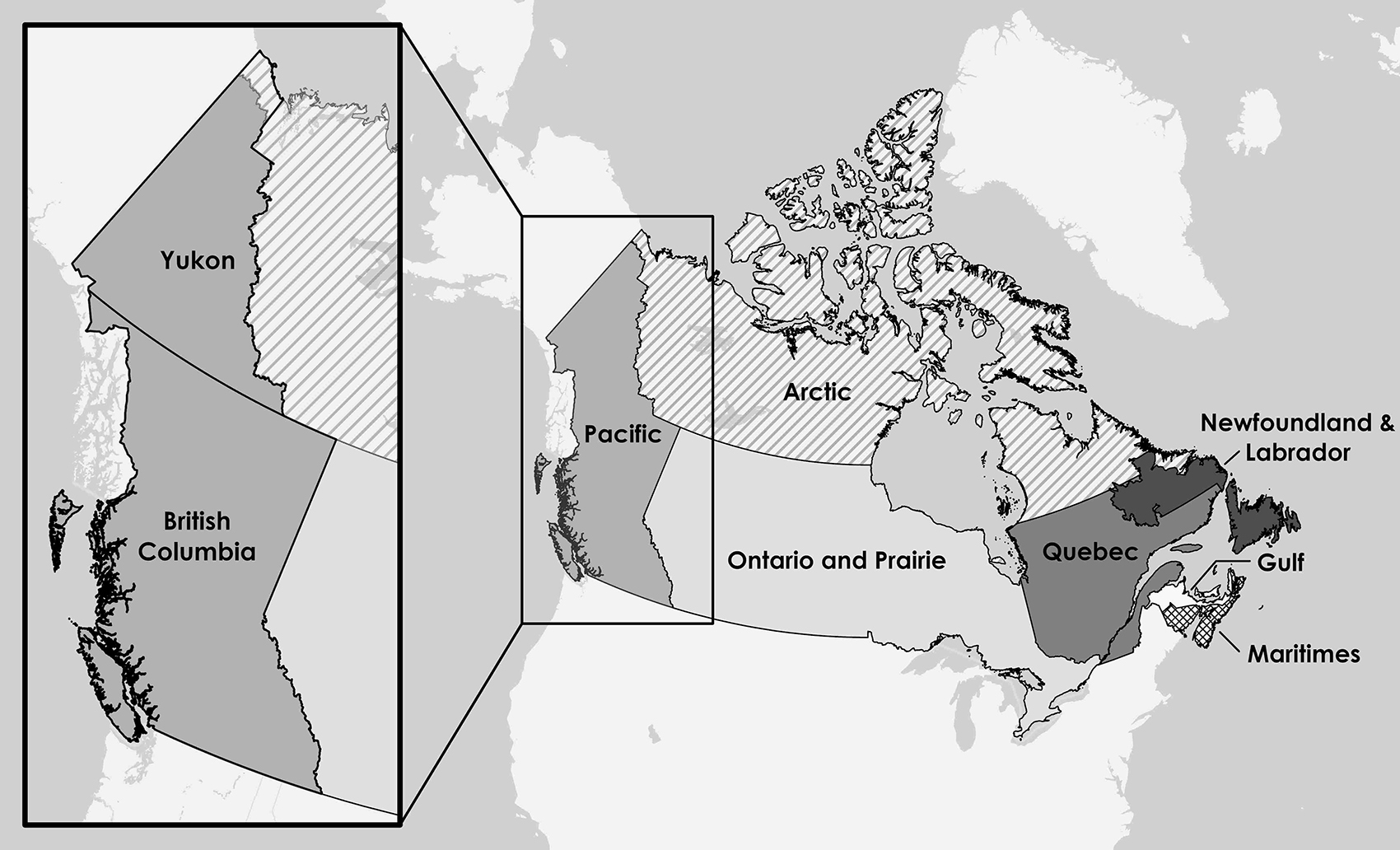
Figure 1. Map of Canada and the seven administrative regions of Fisheries and Oceans Canada.
Pacific Region includes British Columbia and Yukon.
2. Habitat restoration in Pacific region
2.1 Habitat threats
Fish habitat loss, modification, and degradation can result from multiple and interrelated factors. These factors can negatively and cumulatively affect aquatic species, ecosystems, economies, and the people who rely on them. In Pacific region, common human-driven causes of habitat degradation include:
- land development and modification such as urbanization, agriculture, and hydroelectric development
- extractive industries such as forestry and mining
- infrastructure such as roads, dams, pipelines, and railways
- coastal development and modification such as coastal squeeze and aquaculture
- pollution
- tourism and recreational activities
- aquatic invasive species
The combination and interaction of multiple chemical, physical, and biological effects from various threats have caused aquatic habitat degradation and fragmentation, as well as widespread fish population declines, with impacts often extending beyond the watershed in which they occur.Footnote 13Footnote 14Footnote 15 The impacts are further exacerbated by climate change, leading to more frequent and extreme conditions that reduce the resilience, rebuilding, and recovery potential of fish and fish habitat.Footnote 16Footnote 17Footnote 18 Climate change is resulting in:
- increasing air and water temperatures
- ocean acidification
- retreating glaciers
- sea-level rise
- permafrost slumping and contamination
- changes to rainfall, snow melt, and river flow timing
- wildfires and debris flow
- droughts
- floods
Climate change can shift what is considered ‘normal’ in ecosystems, which can make it difficult to define realistic restoration targets.Footnote 19 As a result, restoration efforts can be undermined if threats and the scale of their impacts are not fully recognized and incorporated into restoration planning. Effective climate change adaptation relies on understanding current and projected climate conditions to inform goal-setting, project design, and implementation.
Cumulative effects and climate change should be considered during the restoration planning process to improve outcomes and ensure sustainable recovery of fish and fish habitat. It is essential to assess and understand threats at the watershed level to develop specific actions that address the causes of habitat degradation and the resulting impacts to ecosystem processes, species, economies, and cultural ties. Habitat restoration goals and objectives can then be tailored to address the root cause(s) of degradation, leading to better long-term restoration success, self-sustaining ecological processes, and the recovery of species and stocks of concern.Footnote 20Footnote 21
2.2 Reconciliation
First Nations in Pacific region have exercised stewardship of the lands and waters using traditional knowledge, laws, and governance systems that are still present. They continue to play a vital role in initiating, informing, leading, sustaining, and improving habitat restoration projects in Pacific region (Box 1). In this way, First Nations-led or -partnered restoration brings benefits to First Nations and the broader community by incorporating traditional and local knowledge, creating local employment and training opportunities, and building community capacity for ongoing stewardship. As such, supporting First Nations-led or -partnered restoration work aligns with the Principles respecting the Government of Canada's relationship with Indigenous peoples and Articles listed in UNDA, and contributes to achieving measures in its accompanying Action Plan (Appendix 1).
Developing habitat restoration goals that include First Nations relationships with the landscape, such as harvesting, cultivating, travelling, and monitoring, can advance reconciliation by fostering relationship-building, promoting the revival of traditional practices, and strengthening First Nations’ capacity to lead environmental stewardship programs. First Nations have underscored that habitat restoration provides opportunities for First Nations to:
- reestablish their relationship and reconnect with their lands and waters
- exercise leadership in stewardship
- share and preserve knowledge between generations
- strengthen youth involvement and connection across their territories
- foster and retain local and young habitat restoration professionals
In the development of this restoration priorities plan, First Nations across the region have stated that achieving lasting success in restoring aquatic habitats and species populations requires approaches that are consistent with First Nations’ views on inherent rights, decision-making authority, and jurisdiction over their traditional territories. And, while meaningful, it is essential to recognize that habitat restoration is only one component of a broader, ongoing effort to advance reconciliation. First Nations engaged in the development of the plan also communicated that reconciliation calls for collaboration that respects First Nations’ laws, knowledge systems, and leadership in stewarding the lands and waters.
xʔəl̓ílwətaʔɬ (Indian River) Watershed
The səlilwətaɬ (Tsleil-Waututh) people are undertaking a significant effort to restore and enhance important salmon habitats within the xʔəl̓ílwətaʔɬ (Indian River) Watershed. As part of the xʔəl̓ílwətaʔɬ Watershed Integrated Stewardship Plan, they are creating side channel habitat for coho, assessing steelhead and resident trout species, and native and hatchery stock Chinook populations. They have also prioritized re-establishing conifers in riparian forests and floodplains, enhanced large woody debris concentrations, and restored river and floodplain stability and resilience. They are also assessing and restoring estuary ecological functions, conducting erosion control, removing contaminated wood waste, improving water quality, and removing man-made fish barriers.
2.3 DFO’s history and role in habitat restoration in Pacific region
Growing concerns in the 1950s over declining salmon stocks led DFO to experiment with artificial salmon spawning channels and lake fertilization to support sockeye rearing in the two decades that followed.Footnote 22Footnote 23 The formation of the Salmonid Enhancement Program (SEP) in 1977 was initially based on a formal agreement between DFO and the Province of BC to increase salmonid survival during their freshwater phase.Footnote 24 From the 1990s to 2010s, SEP evolved to include the Community Involvement Program and the Resource Restoration Units. These teams worked with external community groups, focusing on community hatchery operations and spawning channels, and supporting a range of habitat restoration initiatives.Footnote 25
In 2021, based on a historic investment by the Government of Canada to address the decline of wild Pacific Salmon with funding from the Pacific Salmon Strategy Initiative, DFO expanded its habitat restoration programming by launching DFO’s Habitat Restoration Centre of Expertise (RCOE). From 2021 to 2025, the RCOE has been supporting and collaborating with the restoration community to address habitat issues threatening fish around Pacific region, with a focus on Pacific salmon. The RCOE has been supporting Pacific salmon conservation and recovery by co-developing and implementing strategies to:
- build and maintain strong partnerships to advance salmon habitat restoration goals
- promote, support, and implement restoration work in priority areas
- develop and implement monitoring and research to ensure restoration activities are innovative, effective, and based on science
- share science advancements, emerging practices, and lessons learned of habitat restoration through knowledge exchange activities to advance a more consistent use of techniques and toolsFootnote 26
The RCOE’s habitat restoration efforts rely on partnerships and collaboration with the restoration community. Habitat restoration is now largely led by these organizations, with support and guidance provided by the RCOE where requested (Box 2).
Hundreds of habitat restoration projects have been completed in freshwater, nearshore, and marine habitats in Pacific region. Of these projects, freshwater habitat restoration has broadly focused on improving critical spawning and rearing habitat for salmonids, hydrological connectivity, and adjacent floodplain structure. For example:
- creating and restoring off-channel rearing and spawning habitat
- installing large woody debris and/or boulder structures
- riparian, streambank, and slope stabilization
- reconnecting flows and fragmented habitats (Box 3)
- removing or modifying barriers such as culverts and dams
- nutrient enrichment
- managing aquatic invasive species
In the nearshore and marine habitat restoration projects have broadly focused on improving essential spawning and rearing habitat for aquatic species, restoring traditional forage areas for First Nations, and strengthening coastal resilience. For example:
- eelgrass, tidal marsh, and nearshore riparian vegetation transplant
- reconnecting flows and fragmented habitats (Box 4)
- removing or adding sediment
- shoreline recontouring and stabilization using nature-based methods
- transplanting eelgrass and kelp species in sub-tidal areas
- managing aquatic invasive species
- overgrazing by invasive herbivores
- restoring shellfish gardens
Red Slough restoration
The Katzie First Nation, alongside DFO, the Lower Fraser Fisheries Alliance, World Wildlife Fund, BC Parks Foundation, and Age of Union, have restored flow to Red Slough in the Upper Pitt River in southern British Columbia. Red Slough had been disconnected from the Pitt River for over 100 years due to legacy logging infrastructure. As part of the initiative, youth and elders from the Katzie First Nation planted native vegetation, a meaningful step in strengthening the Katzie First Nation’s ongoing connection to their traditional territory, while also restoring important rearing and spawning habitat for salmon.
Kispiox River Emergency work for salmon migration
Emergency works in the Kispiox River in northern British Columbia improved drought-affected fish habitat during upstream sockeye salmon migration. Efforts included reconnecting water flow in sections of the river where fish were stranded. The Gitksan Watershed Authorities and DFO’s Restoration Centre of Expertise completed aerial assessments, hand dredging, and rock placements to concentrate water flows and enable fish to swim upstream.
Agricultural dam removal
Restoration in the estuary of the Cowichan and Koksilah rivers on the east coast of Vancouver Island removed historic agricultural dikes to reconnect intertidal channels and tidal marsh habitat. The Cowichan River estuary and nearshore habitat are important for Pacific salmon, herring, shellfish, migratory birds, and marine mammals.
3. Fish species, areas, and ecosystem processes in Pacific region
As part of the National Framework, each DFO region was tasked with identifying important fish species, areas and ecosystem processes. During engagement phases, the restoration community acknowledged the importance of recognizing the complex interconnections, hišukiš c̓awaak, among species, habitats, ecosystem processes, and the people who share reciprocal relationships with them. Considering this, “importance” is defined by Pacific region’s restoration community as something that holds significant value for those who depend on it.
The restoration community relied on the following interconnected and overlapping values when considering what was important.
- Ecological importance refers to a species’ or ecosystem’s role in the success, survival, fitness, and well-being of other species or ecosystems. For example, a species may be an important food source, may help engineer, create, or maintain the habitat they live in, or import limiting nutrients and promote new or greater growth for other species. Species that have high ecological importance can have an outsized influence over ecosystem structure and function such as keystone species, or may include SAR, or species with low or high abundance.Footnote 27 Highly valued ecosystems may, for example, have high biodiversity, be rare across the landscape, or support species that have been identified as having high value by the people who depend on them.
- Cultural importance refers to a species or ecosystem’s traditional, historical, social, medicinal or spiritual significance for past, present or future generations. This includes species used for food, social and/or ceremonial purposes and those considered cultural keystone species.Footnote 28
- Commercial importance refers to the species or ecosystem’s role in a for-profit fishery (for example, catching, fishing or harvesting).
- Recreational importance recognizes fish species and ecosystems used for non-commercial fishing.
3.1 Fish species
The restoration community identified many fish species of high cultural, ecological, commercial, and/or recreational importance (What we heard: Appendix 3). While many participants in the engagement process emphasized that all species and their interconnections are important, the following species were repeatedly highlighted as examples in surveys, stories and written responses.
3.1.1 Pacific salmon
Chinook (Oncorhynchus tshawytscha), chum (O. keta), coho (O. kisutch), pink (O. gorbuscha), and sockeye salmon (O. nerka) are deeply embedded in Pacific region’s ecosystems and culture. Pacific salmon begin their life in freshwater. Some species grow rapidly and leave for the ocean within weeks of emerging from the gravel, while others rear in freshwater for one to two years. Salmon feed and mature in the ocean, and return to freshwater to spawn, usually to the same streams where they were born, bringing with them nutrients that support greater growth, diversity and density in other species and ecosystems.Footnote 29Footnote 30 For example, resident killer whales are salmonid specialists and their population dynamics are linked to Chinook salmon abundance.Footnote 31
There are about 9,000 populations of wild Pacific salmon, grouped into 450 genetically and ecologically distinct conservation units that return to over 1,000 streams and rivers to spawn in BC and the Yukon.Footnote 32 Pacific salmon are a significant food source for many First Nations and feature prominently in art, stories, ceremonies, and the economy. Pacific salmon also support multimillion-dollar commercial and recreational fishing industries.Footnote 33 Canada’s Policy for Conservation of Wild Pacific Salmon guides Canada and its partners in the protection and conservation of 5 Pacific salmon species and their habitats from common threats including from fishing, forestry, mining, agriculture, urban and hydroelectric development, aquaculture, and climate change.Footnote 34Footnote 35 Significant resources have been invested in conserving and restoring Pacific salmon habitat, improving sustainable fishing, supporting stock recovery through hatchery production, and maintaining cultural connections.Footnote 36
3.1.2 Trout, char, grayling, and whitefish
Throughout Pacific region other salmonid species were identified as having regional ecological and economic values including:
- westslope cutthroat trout (Oncorhynchus lewisi lewisi)
- coastal cutthroat trout (Oncorhynchus clarkii clarkii)
- rainbow trout and steelhead (Oncorhynchus mykiss)
- bull trout (Salvelinus confluentus)
- Dolly Varden (Salvelinus malma)
- lake trout (Salvelinus namaycush)
- Arctic Grayling (Thymallus arcticus)
- mountain whitefish (Prosopium williamsoni)
- lake whitefish (Coregonus clupeaformis)
The diversity of life histories of salmonids includes lake-type, river-type, migratory, resident, and some populations of rainbow trout (that is, steelhead), Dolly Varden and coastal cutthroat migrate to the ocean as adults and return to freshwater to spawn. The recreational fishing industry is valued at $498 million annually in BC.Footnote 37Footnote 38
Salmonids thrive in clean, cool, and connected habitats. Threats to salmonids include habitat loss and fragmentation, water temperature changes driven by climate change, degraded water quality, loss of intact riparian areas, and overharvest.Footnote 39
3.1.3 Pacific herring
Pacific herring (Clupea pallasii) are a pelagic schooling fish that form a central component of the marine food web along the Pacific coast. Pacific herring are a critical food source for Chinook and coho salmon, and are important forage fish for other predators, including pinnipeds, whales, and marine birds. Pacific herring spawn on kelp and eelgrass in nearshore and estuarine habitats in the spring. Larvae and juvenile herring remain in nearshore habitats during their first summer before moving offshore as adults.
First Nations have traditionally harvested herring and gathered roe. Herring is a cultural keystone species for many First Nations through seasonal diets, ceremonies, potlatches and economy.Footnote 40 Pacific herring also support an important commercial fishery in the region.Footnote 41 Pacific herring were historically abundant, but over the last century, their abundance has declined.Footnote 42 Threats to Pacific herring include overfishing, food supply, predation by marine mammals, loss of spawning habitat, and changing ocean conditions. Pacific herring and their habitat are interconnected to people, other species, and ecosystems on the coast.
3.1.4 Eulachon
Eulachon (Thaleichthys pacificus) is a species of smelt that spends approximately 95% of its life in the marine environment before returning to spawn in freshwater. In Pacific region, eulachon range from the Nass to the Fraser River. Eulachon spawn in coastal rivers associated with glacial or snowpack-fed rivers with strong spring freshets.
The high fat content of eulachon made these fish an important source of food for First Nations, shared during celebrations and as a trade link between coastal and interior First Nations.Footnote 43 They can be consumed fresh, dried, smoked, salted, and frozen and have been distributed in potlatches. Additionally, the rendered oil, or eulachon grease, is valued for its medicinal properties.
Populations of eulachon have declined over the past century, with sharp declines observed over the past half-century. No singular cause has been attributed to this decline, but hypotheses include freshwater habitat loss, predation by pinnipeds, altered marine conditions due to climate change, and commercial fisheries bycatch.Footnote 44
3.1.5 White sturgeon
White sturgeon (Acipenser transmontanus) are a long-lived fish (up to 100 years) with a generation time between 30 and 40 years. There are six populations of White sturgeon all found in Pacific region: Lower Fraser, Middle Fraser, Upper Fraser, Nechako, Kootenay, and Upper Columbia. White sturgeon spend most of their life in freshwater but have been observed in the Strait of Georgia, the Strait of Juan de Fuca, and the Fraser River estuary.Footnote 45 The Fraser River white sturgeon recreational fishery is estimated to be valued at $20 million annually.Footnote 46 First Nations have traditionally harvested white sturgeon for food, medicine, and used the meat and spinal cord for ceremonies.Footnote 47
There are several habitat-related threats that are limiting white sturgeon survival, including habitat degradation and loss through dams, impoundments, channelization, and diking. These constructed impediments block access to spawning and foraging sites, alter flow regimes and decrease downstream turbidity, resulting in changes in food availability, and increased juvenile predation.Footnote 48
3.1.6 Marine bivalves
Marine bivalves are commonly found in shallow nearshore marine areas and estuaries and are a common food source for coastal communities. Traditionally cultivated and maintained “sea gardens” are important harvesting sites, and bivalves have been included in First Nations’ ceremonies and trade for thousands of years.Footnote 49Footnote 50 The species composition along nearshore marine areas and estuaries and withing sea gardens varies with local conditions, but can include:
- cockles (Clinocardium nuttallii)
- little necks (Leukoma staminea)
- butter clams (Saxidomus gigantea)
- horse clams (Tresus spp.)
- geoducks (Panopea Generosa)
- manila clams (Venerupis philippinarum) after they were introduced in the early 1900s
Current threats to marine bivalves include ocean acidification, rising sea levels, pollution, and invasive species. The loss of estuary and tidal flat habitats by sea level rise can also be exacerbated by shoreline development.Footnote 51 Declining abundance and restrictions on harvesting due to pollution have reduced food security and curtailed cultural practices for communities that rely on these species.Footnote 52
3.2 Areas
The restoration priorities plan lists specific geographic areas, including watersheds and coastal areas across Pacific region that were identified by the restoration community (What we heard: Appendix 4). This list was generated by engagement participants and in many cases identifies places where they live, where they connect with nature, or the places that support them. While this list is not exhaustive, it emphasizes the importance of connectivity between key habitat types throughout a watershed that directly and indirectly support fish (Figure 2). Key attributes from each habitat type are described below to help guide priority planning for fish habitat restoration. Notable examples of each habitat type from Pacific region have been highlighted throughout this section.
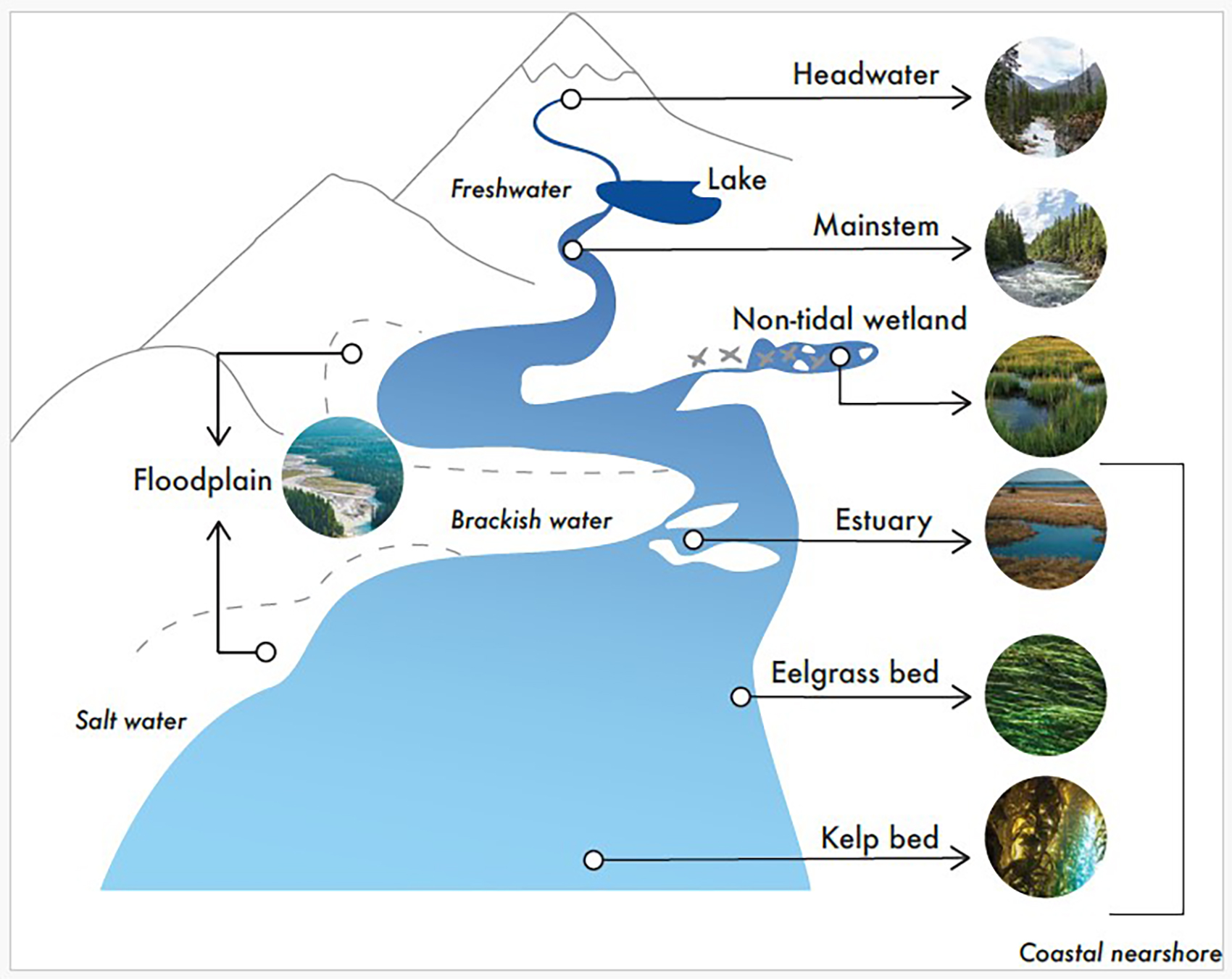
Figure 2. Key habitat types and watershed features in Pacific region.
Long text version
Key habitat types and watershed features in Pacific region.
- Headwater
- Freshwater
- Lake
- Mainstem
- Non-tidal wetland
- Floodplain
- Brackish water
- Coastal nearshore estuary
- Coastal nearshore eelgrass bed
- Coastal nearshore kelp bed
- Salt water
3.2.1 Headwaters
Headwater streams are the uppermost parts of freshwater systems. They include perennial, intermittent, and ephemeral streams, and comprise a large part of river networks globally.Footnote 53Footnote 54 Oftentimes, the uppermost reaches of headwaters are inaccessible to fish, yet headwater streams, whether accessible or not to fish, provide essential ecosystem processes such as storing cold water, are important sources of woody debris, nutrients, food and sediment for downstream fish-bearing reaches, and provide habitat where they are accessible to fish, and other aquatic and riparian organisms. Runoff and groundwater from headwaters transport sediment, wood, organic matter, nutrients, chemical contaminants, fish, amphibians, invertebrates, and other microorganisms downstream.Footnote 55
Headwater streams are often small and sensitive to the surrounding landscapes. Changes in water quantity and quality in headwaters can have large cumulative effects downstream.Footnote 56 Headwaters mediate the frequency and magnitude of downstream floods. Intact hillslope, forest, and riparian zones are critical for headwater streams and their ability to maintain flow regimes that benefit downstream ecosystems. Land-use changes such as timber harvest and road development can threaten healthy, functioning headwaters, and downstream habitats. For example, timber harvest in riparian zones of the North Thompson River resulted in elevated stream temperatures in coho rearing systems.Footnote 57
Headwaters of the Taku River Watershed
Originating in the traditional territory of the Taku River Tlingit First Nation, the headwaters of the Taku River watershed begin in the Stikine Plateau in northwestern British Columbia, near the Yukon border. The Taku watershed spans over 25,000 km2 and is characterized by alpine peaks, boreal forests, and glacial lakes. Five species of Pacific salmon are present in the Taku watershed, with runs estimated at over 2 million salmon annually. The headwaters of the Taku River are relatively intact and undeveloped. In 2023, the Taku River Tlingit First Nation declared 60% of the Taku watershed as an Indigenous Protected Conservation Area. The largest threats within the Taku headwaters are related to mining, and human-caused climate change, including drought, glacial retreat, and wildfire.Footnote 58
3.2.2 Mainstems
Mainstem rivers are essential habitats for fish that offer deep-water refuge, overwintering sites, and ecological functions that support larger growth and diverse river life histories. Mainstem rivers are crucial migration pathways for various diadromous fish species, including salmon, steelhead, and lampreys, as well as resident fish such as rainbow trout, burbot, and bull trout. Impacts to fish on mainstem rivers include barriers that block both lateral access to floodplains and longitudinal access for fish passage. Additional impacts from urbanization include linear development, water extraction, hydroelectric dams, contaminated runoff, motorized recreational vehicle use, and increasing water temperatures as a result of climate change present challenges to fish in mainstem habitats.
Fraser River Estuary
The Fraser River Basin is the longest river wholly contained in BC, spanning approximately 1,375 km and draining approximately 234,000 km2 (one quarter of BC). The river and its tributaries are known as one of the most important salmon rivers in the world, supporting all five Pacific salmon species. The Fraser supports numerous other fish, including steelhead trout, eulachon, white sturgeon, and numerous resident species.
The Fraser River floodplain from Hope to the Salish Sea is the most densely populated area in Pacific region. It supports productive agricultural land formed by nutrient-rich alluvial sediments. A network of dikes, floodwalls, and pump stations was constructed to protect infrastructure but has made off-channel and floodplain habitats inaccessible to fish.
The Fraser River drains into the Strait of Georgia and is the largest estuary in BC composed of a network of tidal marshes, channels, mudflats and eelgrass meadows. Millions of out migrating juvenile salmon pass through the Fraser estuary annually. The Fraser River delta is recognized as a Ramsar “Wetlands of International Importance” and hosts the highest concentration of overwintering birds in Canada.
First Nations across British Columbia have long been connected with the Fraser River, fostering reciprocal relationships with the river during salmon migrations. The importance of the Fraser River extends to many First Nations across the region.
3.2.3 Floodplains
Floodplains are low-lying areas adjacent to flowing rivers and streams formed by the transport and deposition of river sediments over time. They are active seasonally or intermittently wetted during periods of higher water flow. The lateral connectivity between main channels and floodplains provides diverse habitats such as side channels, oxbow lakes, point bars, meander bends, and sloughs.Footnote 59 Many fish species rely on floodplains for feeding, rearing, and refuge during various life stages.
Floodplains are also critical water storage areas that absorb water during floods and recharge groundwater sources. They physically reduce the magnitude of flood events by buffering downstream water quantity, streamflow velocity, and reducing erosive forces, therefore providing refuge for fish during periods of extreme flows. Additionally, floodplains filter excess sediment and pollutants to increase water quality, buffer high flows, and increase water storage. Floodplains increase a watershed’s resilience to climate change by storing groundwater during drought conditions and forming natural firebreaks.Footnote 60 Threats to floodplains include development, altered hydrology, loss of lateral connectivity, and channelization.
3.2.4 Lakes
Lakes are important feeding, rearing, spawning and overwintering habitat for many fish species. Lakes provide spawning areas for fish along deltas or shoals, near the mouth of inlet tributaries, or at outlet streams. The fish species composition of a lake depends on lake depth, water temperature, the number and type of aquatic plants, nutrients and the substrate (for example, mud, sand, or rocks). Lakes also support downstream fish and fish habitat in mainstem rivers and other waterbodies by supplying water, food and sediment. Hydroelectric dams and other structures that impound rivers and lakes, known as reservoirs, can alter flow and thermal regimes, sediment transport, isolate fish populations, and fish community composition.Footnote 61
3.2.5 Non-tidal wetlands
Wetlands are productive habitats located at the interface between freshwater and terrestrial habitats and often located near headwaters and within floodplains. They include marshes, swamps, shallow open water, bogs, and fens. Wetlands provide feeding, rearing, and refuge habitat for many fish species. Connectivity among these habitats is critical to many fish species, particularly those that reside in flood plains of large rivers.
Wetlands also indirectly support fish and other species by filtering sediment, absorbing nutrients and contaminants, capturing water during high flow, releasing water during low flow, and are a source of essential organic matter that supports plankton and benthos that are the foundation of food webs that support fish. Wetlands are an important carbon sink and are at risk from development and land-use changes across the region.Footnote 62
Columbia River Wetlands
The Columbia River Wetlands are one of the largest wetland complexes in British Columbia, weaving 180 km through 26,000 hectares between the Purcell and Rocky Mountain ranges in the traditional territories of the Akisq'nuk First Nation and Shuswap Band. The Columbia Wetlands are recognized as a “Wetlands of International Importance” under the Ramsar Convention, acknowledging their global value. The Columbia Wetlands are a hotspot for biodiversity, including over 260 species of birds, numerous fish such as burbot, bull trout, mountain whitefish and westslope cutthroat trout, reptiles, amphibians, mammals and countless invertebrates. Further, they are a vital component of the Pacific Flyway, a waterfowl migration route from nesting areas on the Arctic Ocean to overwintering areas in South America.
The wetland complex is threatened by climate change and numerous remnant structures that were used to constrict water flow to the main channel for paddle-wheeler traffic in the early 20th century. Other infrastructure impedes gravel recruitment to the floodplain, further eroding the functioning of the floodplain and its wetlands. The mix of public and private land tenures and nearly 100 different management plans related to the Columbia wetlands complicate restoration initiatives. Work is underway to develop an integrated restoration strategy for the area. In collaboration with the Columbia Wetlands Stewardship Partners, a restoration initiative program, led by Living Lakes Canada, has identified a number of features that restrict river and wetland processes. The goal is to prioritize actions that will restore ecosystem processes throughout the wetland complex.
3.2.6 Coastal nearshore
Coastal nearshore areas include tidal marshes, salt marshes, seagrass meadows, and intertidal and subtidal zones. Nearshore habitats support rearing, feeding and migration for numerous fish species, and are an essential habitat for marine invertebrate communities, including marine bivalves. In addition to their ecological role in supporting fish and wildlife biodiversity, nearshore areas filter pollutants, improve water quality, and sequester carbon. They help mitigate climate change by trapping sediments, reducing flood and erosion risks through dissipation of energy from waves, surges, and currents.Footnote 63
Estuaries, eelgrass beds, and nearshore habitats are threatened by increased marine traffic, and are increasingly squeezed between coastal development, rising sea levels and fixed infrastructure, such as dikes and shoreline armouring.
3.2.6.1 Estuaries
Estuaries are areas where freshwater and marine habitats overlap. Estuaries are highly productive for microorganisms, fish, wildlife, and plants and directly support complex food webs, including terrestrial, marine, and freshwater prey available for numerous species. Estuarine conditions change with river discharge, tides, and weather, creating a mosaic of habitats suitable for a diverse array of plants and animals. Many animals reproduce and spend the early part of their lives in estuaries, including juvenile salmon.Footnote 64 Estuaries provide habitats for juvenile salmon as they acclimate to saltwater during their outmigration to the ocean. Salmon that spend more time in productive estuaries grow larger and have an increased likelihood of marine survival. Estuaries are also a key habitat and source of food for invertebrates like crabs and shrimp, and other fish species, including herring, and anchovy.
Skeena River Estuary, Nortwestern BC
The Skeena River estuary, located where the Skeena River flows around a cluster of islands and meets the sea in northern British Columbia, lies within the traditional territories of the Gitxaala, Kitselas, Kitsumkalum, Metlakatla, Lax Kw'alaams and Tsimshian First Nations. This ecologically rich estuary is characterized by extensive eelgrass beds, kelp forests, mudflats and shallow, intertidal passages. Over 50 distinct conservation units from five species of Pacific salmon rely on nursery habitat provided by the Skeena estuary. Juvenile Pacific salmon use estuaries to grow quickly while slowly adjusting to their new saltwater environment. The Skeena estuary is also home to spawning eulachon, migrating and overwintering waterfowl, and wildlife, including wintering and calving moose.
3.2.6.2 Eelgrass beds
Eelgrass (Zostera marina) is a flowering seagrass found in estuaries, shallow coastal bays, inlets, and shorelines along the Pacific coast. Eelgrass beds provide habitat for many aquatic species, organic material for filter feeders such as clams and other bivalves, sequester carbon, and dissipate wave energy. Seagrass meadows can provide food, medicine and are deeply connected to spiritual fulfillment and cultural connections for many coastal First Nations.Footnote 65
Eelgrass Beds, Pacific Ocean
Clayoquot Sound is over 2,600 km2 of inlets and diverse landscapes on the west coast of Vancouver Island, British Columbia, in the traditional territories of the Tla-o-qui-aht, Hesquiaht, and Ahousaht First Nations and is a United Nations Educational, Scientific and Cultural Organization Biosphere Reserve. The sheltered intertidal areas and mudflats of Clayoquot Sound support a myriad of eelgrass (Zostera marina) meadows that provide important habitat for numerous fish species, including juvenile Pacific salmon and spawning Pacific herring, crustaceans, marine bivalves and many other species. Eelgrass meadows are highly productive ecosystems that serve as carbon sinks, storing atmospheric carbon in plant biomass and sediments.Footnote 66
3.2.6.3 Kelp beds
Canopy-forming kelp, including bull kelp (Nereocystis luetkeana) and giant kelp (Macrocystis pyrifera), creates a complex habitat for herring, sand lance, rockfish, lingcod, salmon, prawns, crab, urchins, seastars, abalone, and countless other marine invertebrates. Many coastal First Nations rely on kelp beds for subsistence fishing and gathering food such as herring spawn on kelp.Footnote 67
Kelp beds decrease wave energy, helping to reduce shoreline erosion and mitigate storm surges by dampening waves. They also provide nutrients to shorelines as wrack and sequester large amounts of carbon. In Pacific region, threats to the abundance and distribution of kelp forests are associated with rising ocean temperatures and overgrazing by urchins.Footnote 68 Both salmon and forage fishes rely on kelp beds, showing the interconnectedness between species and ecosystems.Footnote 69
Kelp forest, Haida Gwaii
The underwater kelp forests of the Haida Gwaii archipelago off the west coast of British Columbia are important ecosystems for nearshore marine life. In the traditional territory of the Haida Nation, bull kelp (Nereocystis luetkeana) and giant kelp (Macrocystis pyrifera) form large floating canopies that serve as nurseries and feeding grounds for crustaceans, diverse communities of fish, including Pacific salmon and rockfish, northern abalone, and marine mammals. Kelp forest abundance off Haida Gwaii has declined over the last century due in part to warming ocean temperatures, the loss of sea otters, and the resulting increase in populations of sea urchins, which graze on kelp forests.Footnote 70Footnote 71
3.3 Ecosystem processes and process-based restoration
Restoring ecosystem processes at a watershed scale helps re-establish self-sustaining functions that increase resilience over timeFootnote 72. Key ecosystem processes identified during engagement for this plan included restoring:
- habitat connectivity and eliminating human-made barriers to improve water flow, timing, quality and quantity, improve sediment transport, and fish passage
- geomorphic processes that increase physical habitat diversity and maintain natural channel morphology
- riparian and nearshore shading, filtration, nutrient inputs, food availability, and natural shoreline stability
Ecosystem processes vary by scale, habitat availability, degree of degradation, and susceptibility to climate change. Just as species and their habitats are interconnected, ecosystem processes are interdependent and interconnected.
Re-establishing ecosystem processes requires long-term collaborative goals established through baseline studies, thoughtful design, long-term monitoring, and adaptive management. Process-based restoration is a tool practitioners are using to re-establish ecosystem processes; it is an approach to fish habitat restoration that focuses on restoring natural processes in degraded ecosystems, which create and sustain habitat features. Process-based restoration aims to address the root causes of degradation. Process-based restoration approaches have been embedded in the habitat restoration goals and objectives presented in the next section.
4. Setting restoration goals and objectives
Habitat restoration goals describe the desired future condition of a habitat and serve as targets to guide restoration efforts. Habitat restoration objectives are focused, time-bound achievements designed to help attain restoration goals (Figure 3). Evidence from process-based restoration programs supports combining long-term goals and short-term objectives to maximize restoration benefits. By determining the root causes of habitat degradation and affected species, long-term goals with clear objectives and actionable priorities can be developed to restore self-sustaining watershed processes and reduce symptoms of degradationFootnote 73.
Setting habitat restoration goals and objectives can also advance the acknowledgement and integration of First Nations knowledge and cultural practices, and resilience to climate change.
4.1 Development of goals and objectives
The regional goals and objectives were developed using the National Framework’s restoration principles and are grounded in regional perspectives, reflecting planning already undertaken by agencies, government programs, and communities to identify and implement local fish habitat restoration, as well as extensive regional engagement (Appendix 2). Importantly, they are not ranked by any criteria, in recognition of the interconnectedness between species, ecological processes, and cultural values.
Well-designed objectives are often designed to be Specific, Measurable, Achievable, Relevant and Time-bound (SMART). However, there are other methods designed to help set objectives, including Purposeful, Actionable, Continuous and Trackable (PACT).Footnote 74 The PACT method focuses on continuous output as opposed to final benchmarks and outcomes. This method can be useful when collaboration and stewardship are means by which to achieve habitat restoration goals. The restoration priorities plan relied on both SMART and PACT methods to design goals and objectives that facilitate coordinated decision-making across the region.
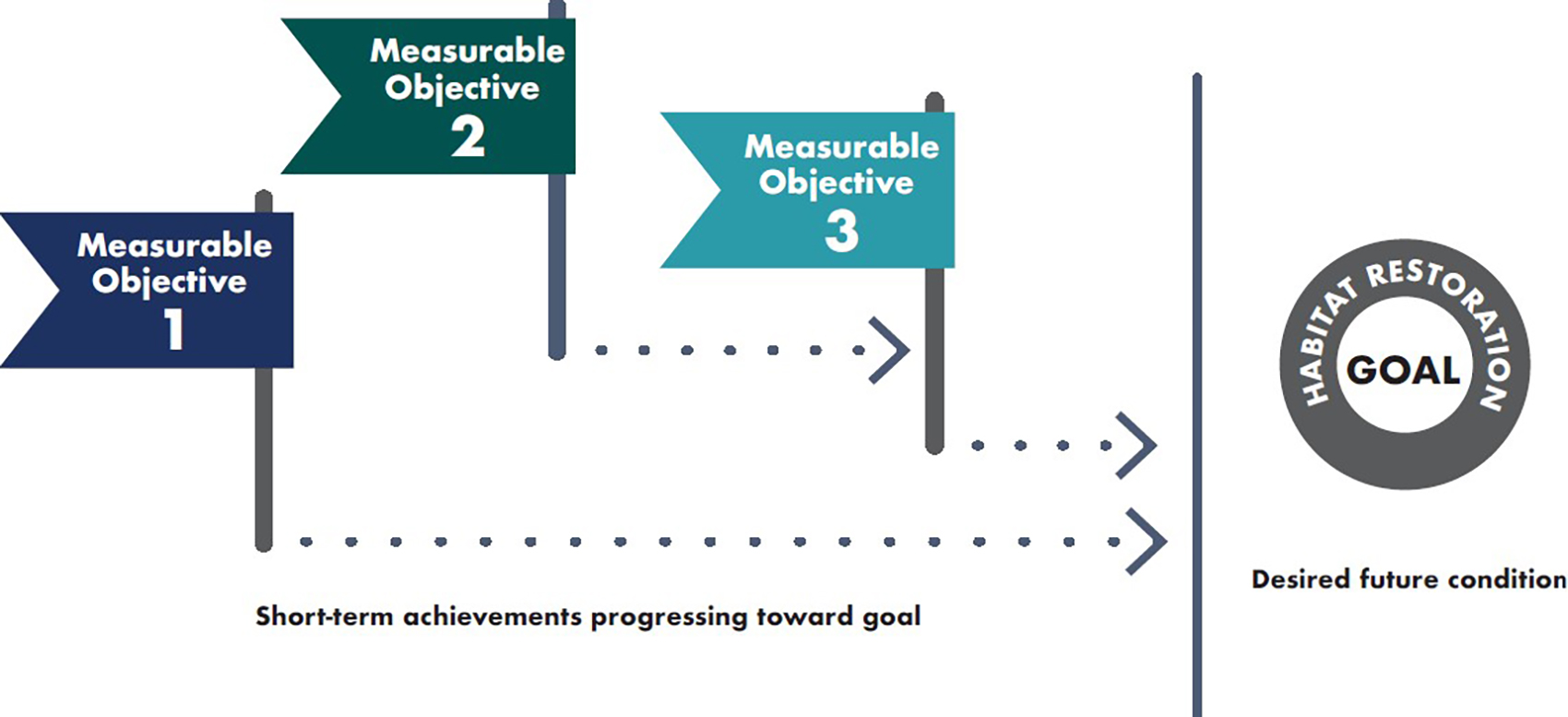
Figure 3. Habitat restoration objectives are focused, time-bound achievements that work towards a desired future condition or habitat restoration goal. Multiple objectives can work concurrently or in series towards a habitat restoration goal.
The regional habitat restoration goals and objectives outlined in Section 4.4 were designed to:
- incorporate approaches that span ecological, geomorphological, hydrological, cultural, and jurisdictional boundaries and can be applied to any species, area, or ecosystem process throughout Pacific region
- address the causes of habitat degradation and loss
- address continued threats that limit productivity and ecosystem processes
- benefit the species and/or areas of concern
- account for the interconnectedness of terrestrial and aquatic species and habitats
- account for climate change predictions
- address threats across multiple scales to account for the large-scale recovery of natural systems
- address First Nations’ cultural revitalization and preservationFootnote 75
4.2 Indicators versus metrics
Ecological indicators integrate information from various metrics or factors into a single value, making them valuable for assessing overall ecosystem health. Indicators can represent different aspects of the environment. Pacific salmon have been used as an indicator species because of their diverse habitat requirements, which are suitable for many other cold-water aquatic species. Other biological indicators consist of groups of species, such as a community of plants or fish. For example, the number of Ephemeroptera (mayflies), Plecoptera (stoneflies) and Trichoptera (caddisflies), known collectively as EPT, is often used as an indicator of water quality.
Historically, indicators have been used in Western science to streamline monitoring processes, but they can overlook other knowledge systems.Footnote 76 Biocultural indicators offer another approach that integrates cultural, social, and place-based knowledge that has developed over time through reciprocal relationships between people and their environment.Footnote 77Footnote 78Footnote 79 Some examples of biocultural indicators shared during engagement sessions include:
- having enough fish on the fishing grounds to support fish camps where knowledge, ceremony, language, and laughter can be shared
- having enough fish to ensure elders are fed, and fish are shared throughout the community
- well-fed bears and wolves observed around spawning grounds
- the return of spring freshets, bird communities, and riparian vegetation along aquatic corridorsFootnote 80
Integrating knowledge systems and sources into useful watershed-based indicators requires inclusive and collaborative working groups and local knowledge. For these reasons, the restoration priorities plan does not include biocultural indicators for regional goals and objectives in the following section. However, to effectively restore habitat processes and cultural relationships, it is recommended to include biocultural indicators as measures of success alongside other metrics. A case study in the Great Bear Rainforest in the traditional territory of the Kitasoo/Xai'xais First Nation provides a framework for establishing locally-driven biocultural indicators.Footnote 81
Choosing standardized metrics allows practitioners to compare ecosystem responses across spatial and temporal scales, as well as both within and between projects. To measure regional progress towards each habitat restoration goal, example metrics have been included for each goal below. These will be measured over time and included in reporting. See Section 6 for more details.
4.3 Considerations
Many of the habitat restoration goals, and objectives presented in the following sections are overlapping and interrelated. Some metrics may also be used to measure progress towards more than one goal. For example, “increase the number of groundwater sources connected to the channel” is used as a metric for both improving water quantity and quality.
The seven goals listed below are intended to be broad yet distinct, to facilitate monitoring and address regional-level threats. However, they may be reorganized or combined to suit specific watershed needs.
Disclaimer: Not every goal or objective will apply to all ecosystem types or address every habitat issue in a restoration plan. The application of the goals and objectives presented in Section 4.4 should carefully consider the root causes of habitat degradation, the requirements of local species, the intended benefits restoration may provide, and an understanding, avoidance and/or mitigation of the unintended negative consequences of habitat work.
For example, increasing habitat complexity may benefit fast-flowing, channelized systems by slowing flow, enhancing groundwater storage, improving nutrient exchange, and supporting diverse species. However, these changes could raise water temperature and lower dissolved oxygen, negatively impacting cold-water fish and aquatic invertebrates.
Given the tremendous diversity of Pacific region, understanding each watershed is foundational to developing appropriate restoration plans.
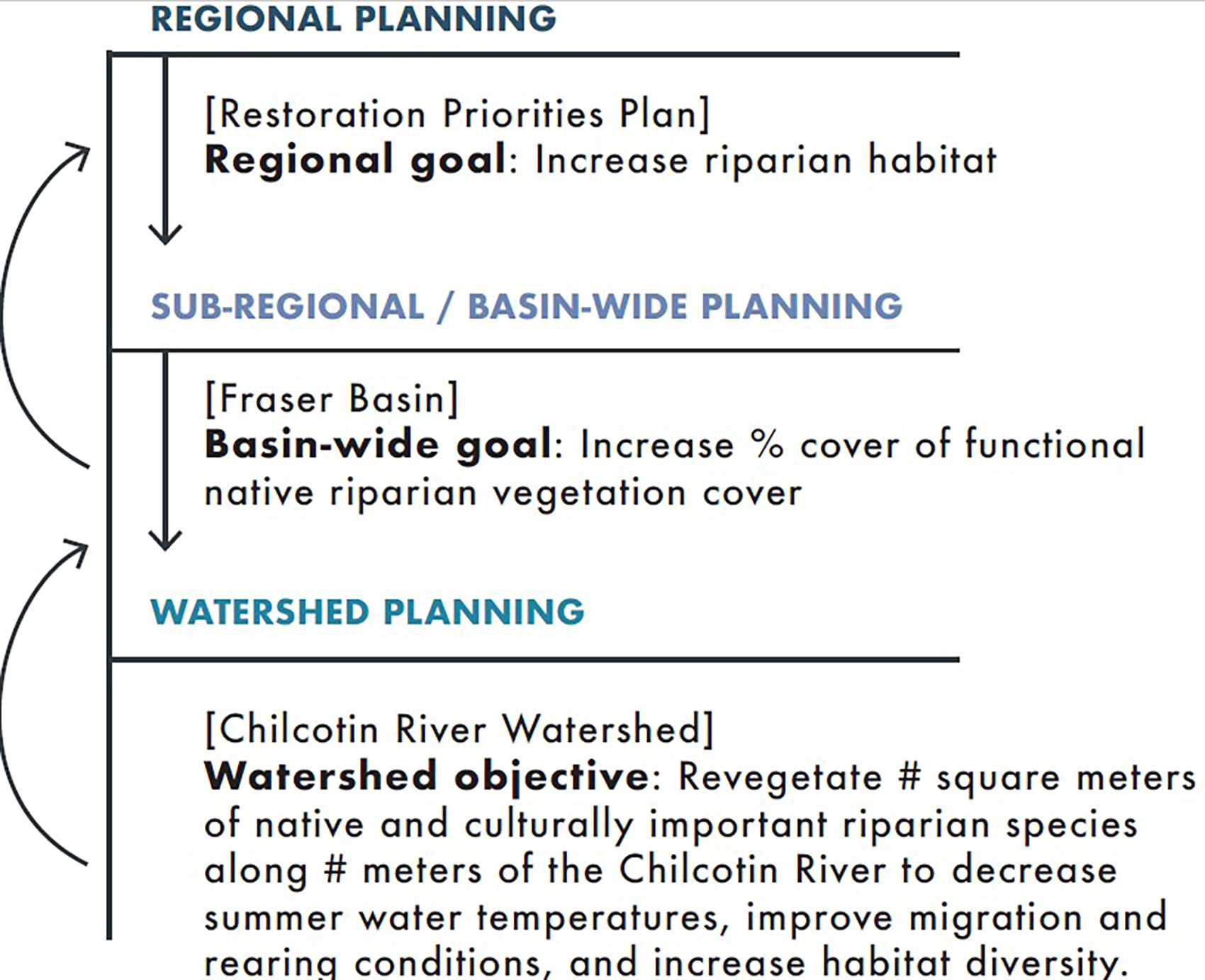
Figure 4. The relationship between regional, sub-regional or basin-wide planning, and watershed planning can be viewed as a hierarchy of increasingly specific goals and objectives. Broad regional goals, like those identified in the restoration priorities plan, can provide direction for basin-wide goals. In turn, these basinwide goals can help guide the development of watershed-level objectives that are specific, measurable, achievable, relevant and time-bound (SMART). SMART watershed objectives translate high-level goals into concrete actions and performance metrics. They allow progress to be tracked within individual watersheds while also showing how local actions contribute to achieving broader basin-wide and regional outcomes. The example basin-wide goal and watershed objective are for illustrative purposes only.
Long text version
Regional planning
(Restoration priorities plan)
Regional goal: increase riparian habitat
Sub-regional / basin-wide planning
(Fraser Basin)
Basin-wide goal: Increase % cover of functional native riparian vegetation cover
Watershed planning
(Chilcotin River watershed)
Watershed objective: revegetate # square meters of native and culturally important riparian species along # meters of the Chilcotin River to decrease summer water temperatures, improve migration and rearing conditions, and increase habitat diversity.
4.4 Pacific region’s habitat restoration goals and objectives
The following goals and objectives can be adjusted to address specific habitat restoration needs at various scales. By leveraging local knowledge of watershed threats, impacts, and requirements, regional goals can be integrated into a basin-wide plan and further refined into SMART watershed objectives (Figure 4).
One goal of many fish habitat restoration projects is to measurably benefit fish populations. Fish population metrics should be quantified before and after a restoration project and repeated for multiple fish life cycles to assess if restoration actions are meeting the project’s specific goals. Wherever possible, fish population response should be measured to identify if the habitat restoration project has a benefit for the species of concern. However, quantifying changes in fish populations, such as abundance or biomass, requires repeated and extensive data collection. In the absence of population data, example metrics presented in this section can be used to monitor habitat changes over time to determine if restoration actions are addressing the causes of degradation that are threatening the species of concern. They can be simpler to measure, more conducive to adaptive management, and have been chosen based on decades of scientific knowledge linking them to beneficial habitat conditions for fish.
4.4.1 Goal: Improve fish passage
Purpose: Physical, human-made barriers, including velocity, light and sound barriers, restrict or prevent fish movement and migration and can increase predation. Removing or upgrading these barriers:
- restores fish access to historical habitats
- provides unrestricted migration for migratory species to and from their spawning grounds
- improves resident fish access to all habitat types
- improves gene flow
- provides access to novel habitats as fish migrate due to changing environmental conditions
- improves habitat connectivity (see next goal)
- improves people’s access to ecologically, culturally, commercially and recreationally important fish species
Habitat restoration objectives:
- Remove or upgrade anthropogenic infrastructure such as coastal floodgates, jetties, causeways, dykes, weirs/dams, undersized culverts, and relic infrastructure (for example, inactive roads, pilings).
- Increase fish access to required habitat during predicted low and high flow conditions due to climate change (for example, create v-notches in channel beds to concentrate flow during droughts, create refuge habitat that is accessible during flood conditions).
- Improve light and sound conditions in and near aquatic habitat that may cause behavioural harm to fish (for example, decrease artificial light at night, increase daylight to covered streams, reduce underwater noise).
- Assess sources of debris accumulations and remove debris caused by anthropogenic changes interfering with ecosystem processes (for example, relic pilings collecting debris, blocking fish passage, and restricting habitat connectivity).
Example metrics:
- increase in unobstructed fish passage (linear m or km)
- decrease in relic infrastructure within riparian and aquatic habitats
- decrease in light intensity around riparian and aquatic habitats
- decrease in anthropogenic sounds in aquatic habitats
4.4.2 Goal: Increase habitat connectivity
Purpose: Increasing habitat connectivity improves horizontal, vertical and lateral water flow (physical connectivity), restores ecosystem processes (functional connectivity), and increases water storage. It also increases the natural mosaic of habitats, resulting in increased resilience of fish and ecosystems to rapidly changing conditions.
Increasing habitat connectivity also:
- buffers against predicted environmental changes in aquatic systems, such as sea level rise
- links heterogeneous habitats and promotes fish production
- increases space along river corridors for flooding and channel migration
- promotes groundwater recharging and supports continuity of flow during droughts
- supports annual and interannual flow variation (that is, restores the natural hydrograph)
- increases marine-freshwater mixing
- supports all life stages of fish
- promotes nutrient exchange between terrestrial and aquatic habitats
- maintains or restores geomorphic processes such as sediment transport and channel-floodplain interactions
- improves fish passage (see previous goal)
- restores cultural processes, land management practices and stewardship opportunities for First Nations their traditional territories
Habitat restoration objectives:
- Remove or upgrade human-made infrastructure such as coastal floodgates, jetties, dykes, weirs/dams, undersized culverts, and relic infrastructure.
- Create new connected habitat or re-engage disconnected habitats, including mainstem, off-channel, riparian, floodplain, wetland, marshland, estuarine, nearshore, kelp, and eelgrass habitat.
- Maintain or increase the length of uninterrupted sediment transport (for example, longshore or longitudinal sediment drift) by removing or redesigning piers, causeways, docks, weirs/dams, or remnant infrastructure in marine and freshwater systems.
Example metrics:
- Increase in area of physically and functionally connected habitat (m2) (species dependent)
- Increase in uninterrupted shoreline length (m or km)
- Change in in salinity (g/L) (project dependent if higher or lower)
- Change in sediment transport rate (m3/s)
- Change in bed elevation
4.4.3 Goal: Increase water quantity
Purpose: Increasing water volume, depth or storage capacity with low-tech and process-based measures can increase the availability of wetted habitat, improve habitat connectivity, slow water flow, increase groundwater storage, and support greater species diversity. The objectives can also support the revival of Indigenous knowledge and management techniques for restoring natural form and function in aquatic environments.
Restoring water volume and depth also:
- increases the physical space available for fish to swim, hide, and forage
- improves a system’s resilience to climate change by promoting infiltration, increases groundwater recharge and improves flow continuity during summer and winter low flows
- supports fish passage and habitat connectivity (see goals above)
Habitat restoration objectives:
- Increase water volume and depth during low flow periods.
- Maintain or increase connectivity to groundwater sources in river systems.
Example metrics:
- Increase in water flows(m3/s) during low flow periods
- Increase water storage capacity (m3)
- Increase in the number of wetted channels
- Increase in total wetted area (m2)
- Increase in water volume during critical low flow periods (m3)
- Increase in water depth (m)
- Increase the number of groundwater sources connected to the channel
4.4.4 Goal: Improve water quality
Purpose: Improving water quality measures, such as temperature, dissolved oxygen, pH, turbidity, nutrient concentration and suspended solids, provides cool, clean water for fish and has co-benefits for people, plants, and other animals. Groundwater regulates surface water temperature during both summer and winter. Reducing impermeable surfaces and allowing water to move laterally over its floodplain during high flows improves water absorption and filtration, recharges groundwater sources, reduces flood risk, and decreases non-point-source pollution in aquatic habitats, which also:
- improves habitat conditions and availability for fish
- promotes native species diversity
- increases resilience and adaptability to changing conditions
Habitat restoration objectives:
- Maintain and/or improve water temperature using a variety of methods (for example, overhanging vegetation, or large wood, expand connectivity to cold water refugia).
- Maintain or increase connectivity to groundwater sources in river systems.
- Reduce the percentage of impermeable surfaces around aquatic habitats (for example, riparian revegetation, rain gardens in urban centres and around confined channels).
- Decrease livestock access along sensitive banks and near sensitive aquatic habitats (for example, spawning habitat).
- Remove and/or replace contaminated infrastructure (such as treated pilings with creosote) following provincial and federal guidelines (for example, the Guidelines for Use of Treated Wood In and Around Aquatic Environments and Disposal of Treated Wood)Footnote 82.
- Minimize other point source pollution (for example, road runoff, agriculture runoff, and other contaminants).
Example metrics:
- Reduce water temperatures (°C) that may cause physical and behavioural stress to fish
- Increase in the number of groundwater sources connected to the channel
- Decrease in percent impermeable area around aquatic habitats (%)
- Decrease in the number of creosote structures in aquatic habitats
- Decrease in detectable pollutants within water samplesFootnote 83
4.4.5 Goal: Increase riparian habitat area
Purpose: Restored riparian vegetation can lower water temperatures, enhance water filtration to minimize point-source and non-point-source pollution, provide direct and indirect food inputs, and reduce human-caused sedimentation by naturally stabilizing banks and shorelines. Functional shading can buffer stream temperatures and help offset the warming effects of climate change.Footnote 84 Riparian vegetation is also a source of large wood, which creates habitat complexity (for example, pools, undercut banks, and debris jams).
Habitat restoration objectives:
- Increase riparian and nearshore vegetation cover by revegetating riparian areas using native plants, trees and shrubs.
- Incorporate native vegetation that supports First Nations’ food security and cultural practices into re-vegetation plans.
Example metrics:
- Increase in riparian area (m2)
- Increase in the percentage of native vegetation cover in riparian areas (%)
- Reduced stream temperature with thermal shading (°C)
- Increased inputs of large wood and organic matter
4.4.6 Goal: Improve habitat complexity and diversity
Purpose: Complex and diverse habitats support a broad diversity of species across life stages, as well as population and genetic diversity within species. Species and population diversity increase an ecosystem’s resilience to change. Practitioners can support fish species recovery by creating and protecting a diversity of self-sustaining hydrological, geological, and ecological processes in freshwater and marine environments.
Habitat restoration objectives:
- Increase physical habitat diversity and functional connections between habitats (for example, pools, riffles, off-channel habitat, aquatic and terrestrial cover, and intertidal soft sediments)
- Decrease the area of hard armour along riverbanks and shorelines.
- Maintain or increase natural river channel and nearshore morphology (for example, large wood installations, dendritic channels, shoreline length).
- Maintain or increase the area of spawning, rearing, feeding, refuge and overwintering habitat (for example, reconnect rivers to their floodplains).
- Control and prevent the introduction and spread of aquatic invasive species.
Example metrics:
- Increase in the area of native aquatic and riparian vegetation cover (m2)
- Increase in the variability of functionally linked aquatic habitats
- Increase the amount of hydrologically engaged off-channel habitats, including ephemeral and seasonal channels and wetlands
- Decrease in the density or percent cover of aquatic and riparian invasive species
4.4.7 Goal: Improve watershed hydrology and sediment transport
Purpose: An intact or restored watershed:
- re-establishes water absorption and filtration
- supports soil retention throughout the watershed
- reduces unnatural sediment load
- increases native vegetation growth
- re-initiates species interactions and ecosystem processes
- addresses landscape-level degradation that affects downstream fish habitat
- can restore lands and waters that are culturally significant for First Nations
- re-establishes reciprocal inter-species relationships
Habitat restoration objectives:
- Increase native vegetation in degraded upslope and headwater habitats.
- Reduce the angle of upslope areas.
- Incorporate native vegetation that supports First Nations' food security and cultural practices into re-vegetation plans.
Example metrics:
- Increase area of native vegetation cover (m2)
- Increase the percent of native vegetation cover in riparian areas
- Decrease in magnitude and frequency of high flow events
- Decrease in fine sediment inputs into streams
- Decrease in slope angle in over-steepened or exposed terrain
4.5 Measures that support habitat restoration success
The restoration community provided feedback on additional topics that can improve outcomes for fish and influence the success of habitat restoration. These topics are presented in the following subsections. Recommendations from the restoration community for each topic are presented in Appendix 2.
4.5.1 Habitat protection
When there is the option, protecting fish and fish habitat and preventing impacts before they occur is one of the most effective methods for preserving fish habitats and ecosystem processes.Footnote 85Footnote 86 Strong regulations and legislation that safeguard aquatic habitats also supports restoration goals. Protected areas provide space and time for ecosystem processes, like floods and fires, to shape the landscape, promoting habitat heterogeneity and supporting species resilience to climate change.Footnote 87 Ecologically and culturally protected habitats also improve the success rate of restoration projects that are placed adjacent to them.Footnote 88Footnote 89
The local effects of habitat restoration can be difficult to detect at broader scales due to high natural variability, confounding factors such as fisheries pressures and marine survival and because the rate of habitat degradation can progress faster than restoration and recovery.Footnote 90 Protecting habitats from further degradation and integrating First Nations’ cultural and fish habitat values into land and water management can help improve the likelihood of successful restoration. These actions lay a strong foundation for effective restoration and building ecosystem resilience. DFO has a mandate to conserve and protect fish and fish habitat under the Fisheries Act. UNDA and its accompanying Action Plan Measures 37 and 41 (Appendix 1) reinforces the Government of Canada’s commitment to promote a collaborative approach to conserving and protecting all fish habitat. The establishment of a network of marine protected areas in the Great Bear Sea, an area along BC's north and central coast, is an example of collaborative habitat protection. This achievement was made possible through the collaboration of First Nations, the Government of Canada, and the Province of BC, and is supported through an Indigenous-led Project Finance for Permanence model.Footnote 91Footnote 92
4.5.2 Monitoring
Monitoring fish and fish habitat before and after restoration is essential to determine if (1) a restoration project is meeting goals and objectives, (2) fish populations are improving, and (3) funding and resources are being used effectively.Footnote 93Footnote 94Footnote 95 There is often a delay between restoration actions and the responses observed at the habitat, ecosystem, or population level. Effectiveness monitoring can account for longer-term responses and measure the appropriate metrics to assess the outcomes for restoration objectives, including changing reference conditions through time.Footnote 96 If the restoration project does not meet its objectives, practitioners and policymakers can use information from monitoring to modify strategies using an approach to strengthen the current restoration project and guide future restoration efforts. In this way, effectiveness monitoring can help support future funding initiatives and applications by identifying successful methods and highlighting where and how the largest benefits can be achieved. Funded monitoring programs can also support fisheries guardian programs and their efforts to address their communities’ needs.Footnote 97 First Nations-led monitoring can establish best practices and interconnected indicators of success. To help meet UNDA and its accompanying Action Plan Measure 39 (Appendix 1), DFO has collaborated with multiple working groups to establish key components of the Fisheries Guardians program. The training curriculum for new Aboriginal Fisheries Guardians is being developed through a collaborative process that involves Guardians, Indigenous Knowledge holders, and departmental representatives to ensure the curriculum meets the needs of both the department and the various communities with Guardian programs across the country.Footnote 98
4.5.3 Funding
A number of organizations, including but not limited to, DFO, BC Hydro, and the Pacific Salmon Foundation provide funding that supports habitat restoration in BC and the Yukon (for example, BC Salmon Restoration and Innovation Fund, Coastal Restoration Fund, Aquatic Ecosystems Restoration Fund, Fish and Wildlife Compensation Program, and Community Salmon Program). Engagement feedback highlighted the need for more consistent, accessible, and long-term funding to effectively support the full lifecycle of habitat restoration projects, including planning, implementation, monitoring, and maintenance. Habitat restoration is a multi-year process that requires sustained funding to achieve the project goals and objectives without risks of compromising momentum and success.
Additionally, engagement participants shared a desire for change in how funds are allocated and reported, advocating for more transparent, equitable, and responsive funding mechanisms. This includes streamlining application and reporting processes to reduce administrative burdens and maintain focus on restoration efforts to provide the most benefit for fish and fish habitat.
First Nations shared that predictable and flexible funding would enable Indigenous partners to fully engage in restoration initiatives. Such funding enables First Nations to reliably grow their capacity, participate in training and decision-making, retain expertise, lead programs, collect and share knowledge and data. These efforts would directly advance objectives in UNDA and its accompanying Action Plan Measures 38 and 39 (Appendix 1).Footnote 99
4.5.4 Collaboration and coordination
Improving collaboration and coordination among First Nations, and stakeholders has become a key theme of the restoration priorities plan. Restoration planning within broader watershed-scale contexts and actions can provide maximum benefits for fish and fish habitat.Footnote 100 The restoration community would like to continue building and strengthening partnerships with agencies, improve knowledge transfer, and share expertise, resources, equipment and capacity to action work on the ground. Feedback from the restoration community emphasized the need for improved regulatory coordination, communication, and collaboration to support effective fish habitat restoration. The multi-jurisdictional nature of restoration in Pacific region often involves numerous agencies, which can lead to confusion about roles. Collaboration and coordination can have immediate benefits for fish and offer practitioners the ability to start smaller-scale actions while planning is occurring in the background. For example, organizations like Ducks Unlimited Canada are working alongside landowners to help reduce riparian disturbance along river banks. This work would not be possible without willing partners and the coordinated use of resources.
5. Criteria to guide habitat restoration decisions
Habitat restoration expertise continues to increase in Pacific region. However, challenges with capacity, funding, time, and equipment hinder the restoration community’s ability to undertake all the restoration work needed to support fish and their habitat. Priority setting helps determine the most suitable tasks to address habitat degradation and achieve the greatest benefits for fish at the right time and in the right place.Footnote 101
Though engagement participants agree that restoration priority setting can be helpful when resources are limited, many noted that prioritizing or ranking specific habitat restoration goals at a regional scale in the restoration priorities plan would ignore:
- watershed-level assessments that identify local threats and impacts, species and populations’ needs, and specific projects that are informed by local and Indigenous knowledge
- First Nations’ rights, title, and jurisdiction over their settlement lands and traditional territories
- First Nations’ economic and cultural practices, reliance, and relationships with fish and fish habitat
Based on this feedback, the regional habitat restoration goals and objectives outlined in Section 4.4 were not ranked. Instead, a shared set of criteria was established to guide habitat restoration decisions across all levels of planning:
- led by, partnered, or identified as a priority by First Nations
- demonstrate clear benefits to fish and their habitats
- incorporate climate change resilience and mitigation measures
- use nature-based solutions and process-based actions where feasible
- address threats and impacts at the watershed level
- incorporate effectiveness monitoring to evaluate outcomes
5.1 Collaborative habitat restoration across scales in pacific region
Across Pacific region, several organizations, agencies, councils, First Nations, and governments are working collaboratively across disciplines and at multiple spatial and organizational scales to restore fish habitat. Research shows that restoration planning is most effective when it integrates cross-disciplinary approaches and embeds place-based watershed knowledge within broader regional and sub-regional strategies.Footnote 102 This approach supports locally tailored solutions, fosters community partnerships, and leverages planning and decision-making across spatial and temporal scales.
Ecosystem processes and fish populations respond differently to various habitat restoration methods, and the benefits of restoration work often take years to decades to become evident.Footnote 103 By working collaboratively, partners can better address the long-term challenges of habitat restoration and ensure effectiveness over time.
Two examples of cross-jurisdictional strategies that are in development in Pacific region include (1) the Trilateral Accord to address the decline of wild Pacific Salmon (Trilateral Salmon Accord) signed on June 21, 2024, by the First Nations Fisheries Council of BC as secretariat for BC First Nations, the provincial Ministry of Water, Land, and Resource Stewardship and DFO, and (2) the Yukon River Chinook Salmon Rebuilding and Ecosystem Strategy being collaboratively developed by Yukon First Nations, the Yukon Salmon Sub-committee, the Yukon First Nations Salmon Stewardship Alliance, the Government of Yukon, and DFO.
The Trilateral Salmon Accord lays a foundation for improved alignment and coordination for salmon rebuilding activities across five priority areas of focus, including habitat restoration at a provincial scale. While the Yukon River Chinook Salmon Rebuilding and Ecosystem Strategy includes the identification of habitat restoration objectives for Chinook salmon in the Canadian portion of the Yukon River Watershed. Success as defined by the strategies will take time but there is success in how the partners have come together to develop a path forward for the recovery of fish and fish habitat.
5.2 Watershed planning
The goals and objectives listed in Section 4.4 were co-developed to support the prioritization of restoration actions at the watershed scale. A watershed plan is a tool to characterize fish and fish habitat within a watershed, while identifying threats and impacts caused by human activities and climate change. Characterizing the watershed helps planners understand the scope and scale of these impacts, and informs management strategies aimed at improving fish habitat. A clear understanding of localized issues, such as those preventing the recovery of species, areas or ecosystem processes, is essential for implementing effective restoration actions. This approach supports the development of self-sustaining and resilient ecosystems over the long term.
To support watershed planning, DFO has developed a practitioner's guidebook that outlines a process for collaborative planning and habitat restoration in Pacific region. This guidebook will support planners and practitioners in identifying key pressures and impacts on fish populations. It offers considerations for undertaking collaborative planning with multiple jurisdictions and other partners, at sub-regional or watershed scales. The guidebook also offers insights to help users identify data gaps and integrate Indigenous and local knowledge, scientific expertise, and community values into watershed and habitat restoration plans.
Some watershed to sub-regional scale collaborative tables are already piloting integrated watershed planning, which detail restoration priorities based on local threats and impacts. These tables include the Yukon River Chinook Rebuilding and Ecosystem Strategy, the Cowichan Watershed Board, the West Coast of Vancouver Island Chinook Rebuilding Plan, the Nicola Watershed Salmon Ecosystem Table, and the Thompson-Shuswap Salmon Collaborative. These collectives are excellent examples of First Nations and federal, provincial and territorial governments working together to develop comprehensive watershed recovery plans.
6. Revisions and reporting
The restoration priorities plan is an evergreen document; a living plan that allows for continued development and refinement. The effectiveness of the restoration priorities plan will be assessed by compiling data from restoration project monitoring programs, and the plan will be adapted based on the results from those programs.
Progress reporting and revisions of the restoration priorities plan will be scheduled as needed to consider advancements in knowledge, techniques and lessons learned and undertake minor updates (for example, updated links and sources). The following could result in updates to the guidance presented in the restoration priorities plan:
- changes in techniques or standard approaches to restoration implementation
- changes in habitat threats, risks or limiting factors
- revisions to stock recovery or management plans
- new, or revisions to, SARA recovery strategies, action plans, or management plans
- new or updated Committee on the Status of Endangered Wildlife in Canada assessments
- changes to Provincial or Territorial restoration or species recovery priorities
- priorities identified in First Nations management plans
- changes in impacts of, or risks posed by, aquatic invasive species (for example, through establishment, range expansion, or introduction of new species)
- inclusion of new or revised data from climate models
- alignment with other departmental plans (for example, SEP)
- restoration measures identified by the Minister to maintain major fish stocks at or above the level necessary to promote the sustainability of the stock (Fisheries Act, Section 6.2(5))
- inclusion of new or revised data on restoration activities, which may impact future restoration
- changes to legislations, regulations or policies
Appendix 1: UNDA action plan measures
Action plan measure 37: In a measurable manner, enhance collaborative tools, agreements and transparent approaches to better deliver on the collaborative design, development, delivery and management of fisheries, as well as conservation and protection of fish habitat. Fisheries and Oceans Canada and Crown-Indigenous Relations and Northern Affairs Canada will continue to pursue fisheries-related collaborative governance opportunities through nation-to-nation, Inuit-Crown and government-to-government negotiations.
Action plan measure 38: Provide predictable and flexible funding that will ensure Indigenous partners have the capacity to provide fisheries, habitat, science, and oceans and marine-related services. Provide predictable and flexible funding to ensure Indigenous nations and organizations have the capacity to meaningfully participate in advisory, co-management, and decision-making processes tied to aquatic resources and oceans management.
Action plan measure 39: Develop and implement legislative, policy, or program supports, as well as provide predictable and flexible funding, to ensure fisheries guardians can meet community needs.
Action plan measure 40: Develop and employ mechanisms that respect and incorporate Indigenous Knowledge as a distinct knowledge system in the management of fisheries, fish habitat, conservation, marine safety and protection of the marine environment.
Action plan measure 41: Through meaningful consultation and collaboration and partnerships with Indigenous groups and British Columbia and Yukon partners, Fisheries and Oceans Canada will implement the Pacific Salmon Strategy Initiative to protect and revitalize salmon populations and their habitats.
Action plan measure 42: Through meaningful consultation and collaboration and partnerships with Indigenous governments, organizations, communities and other partners, advance marine Indigenous Protected and Conserved Areas to support Canada’s commitments to reconciliation and marine conservation.
Related to UNDRIP articles: 10, 26, 27, 28, 30, 32
UNDA Chapter 5: Indigenous modern treaty partner priorities
Action plan measure 13: Collaborate with Modern Treaty Partners to pursue possible changes to federal fisheries legislation, regulations and policies to: a) align with Canada’s Modern Treaty relationships, objectives and obligations, including the spirit and intent of those agreements. b) address issues and barriers to the effective exercise of Indigenous Modern Treaty Partner jurisdiction respecting fisheries. c) support healthy fish and aquatic plant populations. d) support successful free, prior and informed consent implementation regarding federal legislative or administrative measures that may affect the fisheries-related modern treaty rights and obligations.
Related to UNDRIP articles: 37
Appendix 2: What we heard
Read the full What we heard document here
Appendix 3: Measures that support habitat restoration success
Throughout engagement the restoration community identified measures to improve aquatic ecosystems and fish populations. These measures were categized into three categories: habitat protection, monitoring, and funding measures.
Suggested habitat protection measures
- Suggested habitat protection measures1
- Increase financial and regulatory support for First Nations-led watershed-level habitat protection initiatives (for example, Salmon Parks, Great Bear Sea Project Finance for Permanence)
- Increase floodplain and wetland protection, particularly where land-use changes or development may be high
- Increase protection and improve management of upslope landscapes and riparian buffers
- Protect current and future water supply and demand2
- Increase the number of aquatic systems with environmental flow needs assessments and allocate water as a percentage of water available after environmental needs have been met
- Support Canada’s 2030 Nature Strategy Target 3 to ensure and enable 30% of terrestrial and inland water and of coastal and marine areas are effectively conserved by 2030, which promotes biodiversity and supports important species, areas, and ecosystem processes identified in this plan3
- Focus on locating and protecting groundwater-fed streams
- Strengthen stream-crossing guidelines and support for clear-span bridges (for example, the updated Code of Practice for Culvert Maintenance no longer includes culvert replacement)
- Continue to identify, measure, and incorporate water flow needs for aquatic ecosystems into regulatory decision-making
- Mandate efficiencies for large-scale water use
- Update regional timing windows to reflect shifting habitat use and protect key habitat during sensitive life history stages (for example, Pacific herring and salmon spawning)
Suggested monitoring measures
- Increase standardized baseline and post-restoration fish and fish habitat monitoring for restoration projects over a timescale appropriate to detect the effects of the restoration work.
- Consider measures of ecosystem processes, fish and habitat abundance productivity, diversity, and spatial distribution4
- Incentivize monitoring previously implemented restoration projects and promote learning opportunities (such as lessons learned from successful and failed restoration work)
- Measure and analyze habitat and fish metrics that capture process change and progress towards measurable proximate objectives (for example, temperature reduction, improving habitat structure, water quality or increasing the depths of rearing pools), in addition to ultimate objectives such as smolt biomass, incubation success rates, standard counts and linear and aerial measurements (for example, the number of fish, number of plants planted, square meters planted, linear meters of accessible habitat)
- Develop standardized protocols (for example, snorkel surveys, photo-monitoring, installing multi-parameter water quality meters, remote sensing technology) to assess the effects of restoration actions (such as fish population response, instream or riparian habitat function; see Funding objectives) and compare across projects and watersheds
- Lower the barriers to conducting standardized restoration monitoring by providing support for study design and interpretation, low-cost restoration approaches, and technical guidance
- Promote the sharing of standardized monitoring data to improve restoration actions (for example, formal comparisons of approaches within/across watersheds) and to support practitioners without the resources to conduct comprehensive effectiveness monitoring (for example, share fish abundance data that may otherwise require several sampling years to acquire)
Suggested funding measures
- Increase long-term, stable funding for habitat restoration (for example, create new funds that support restoration for terms beyond three to five years to include all restoration stages from initial planning to effectiveness monitoring after a project is complete)
- Implement a non-competitive, flexible funding initiative specific to First Nations that enables:
- Self-determination and trust
- Cross-territorial knowledge- and capacity-sharing
- Long-term staffing, building of capital assets and knowledge retention
- Implement a non-competitive, flexible funding initiative specific to First Nations that enables:
- Fund long-term (10+ years) habitat effectiveness monitoring programs following habitat restoration project completion to adequately assess project success (or failure) and contribute to learning opportunities for all practitioners
- Streamline funding applications and standardize reporting requirements to improve project implementation and data sharing
- Increase funding for innovative approaches and experimental design
- Continue to update and routinely share information on new and existing restoration funding resources, application requirements and due dates
Suggested collaboration and coordination measures
- Organize pre- and post-season knowledge-sharing meetings with First Nations and all other levels of government along key Pacific salmon migratory routes to share goals, needs, and lessons learned (supporting UNDA Action Plan Measures 37, 40 and 41; Appendix 3)
- Increase support for conferences, workshops and other events where community members and professionals can interact and share information and experiences (for example, the Yukon River Panel Educational Exchange, and the Pacific Salmon Foundation Salmon Recovery Conference
- Increase community awareness of key environmental issues impacting local watersheds and local habitat restoration projects
- Connect local young professionals and First Nations with environmental professionals, organizations, or events (such as mentorship programs, conferences, workshops, annual meetings and others)
- Develop and organize volunteer habitat restoration events that incorporate on-site and hands-on learning, and environmental and cultural education components in partnership with local First Nations and community groups
- Ensure that First Nations are represented as leaders or co-leaders.
- Incorporate First Nations storytelling in conjunction with Western knowledge systems to align with UNDRIP Article 31, which cites “the rights of Indigenous Peoples to maintain, control, protect, and develop their cultural heritage, traditional knowledge, and traditional cultural expressions, as well as the manifestations of their sciences, technologies, and cultures”
- Develop a mentorship program for young professionals interested in pursuing environmental education that connects them with local ENGOs, professionals, First Nations elders, and community stewards
- Develop and enact a communication plan with various pathways to educate and alert communities of local restoration initiatives and opportunities.
Glossary
- Adaptive management
- An integrated, multidisciplinary and systematic approach to improving natural resource management. Management methods are updated based on the outcomes of implemented management policies, practices and monitoring protocols.Footnote 104
- Aquatic invasive species
- Freshwater or marine plants, animals, algae and micro-organisms introduced outside their natural or past distribution. Invasive species specifically disrupt the composition and/or function of native ecosystems, often outcompeting local species.
- Coastal squeeze
- Refers to the loss of intertidal habitats caused by rising sea levels and fixed human infrastructure.
- Conservation unit
- A group of wild Pacific salmon sufficiently isolated from other groups that, if extirpated, is very unlikely to recolonize naturally within an acceptable timeframe, such as a human lifetime or a specified number of salmon generations.Footnote 105Footnote 106
- Cumulative effects
- Changes in environmental, social, economic, and cultural values and conditions caused by the combined effects of past, present, and reasonably foreseeable future human activities and natural processes.Footnote 107Footnote 108
- Ecosystem process
- Also known as an ecosystem function. It is a suite of dynamic physical, chemical, and biological processes that sustain life for organisms. These include productivity, energy flow, and nutrient cycling.
- Engagement
- An ongoing, consistent dialogue that builds trust and respect between parties on issues of mutual interest and supports Canada’s commitment to implement the United Nations Declaration on the Rights of Indigenous Peoples, as per the federal United Nations Declaration on the Rights of Indigenous Peoples Act, and the Principles respecting the Government of Canada's relationship with Indigenous peoples. Engagement is often considered a spectrum and can include information sessions, meetings, workshops, and site visits.
- Engagement participant
- A member of the restoration community who provided feedback during development of the restoration priorities plan.
- Fish
- As per the definition in the Fisheries Act, “fish” referenced in the Fish Habitat Restoration Priority Planning Guide for Pacific region includes all species and life stages of fish, shellfish and crustaceans, including eggs, sperm, larvae and spat. Please note that this plan does not include habitat restoration goals for marine mammals, which are included in the definition of “fish” in the Fisheries Act.
- Fish habitat
- As per the definition in the Fisheries Act, fish habitat is water frequented by fish and any other areas on which fish depend directly or indirectly to carry out their life processes, including spawning grounds and nursery, rearing, food supply and migration areas.
- Habitat restoration
- Assisting with the recovery of an ecosystem or habitat to a more resilient state by re-establishing structure, species composition and ecological processes through active means, for example, landscape manipulation, or passive means such as removing old infrastructure and allowing natural processes to recover.Footnote 109
- Hišukiš c̓awaak
- “Everything is one” in Nuu-chah-nulth-aht, among species, habitats, ecosystem processes, and the people who share reciprocal relationships with them.
- Importance
- Defined by Pacific region’s restoration community as something that holds significant value for those who depend on it.
- Indicator
- Integrates information from various metrics or factors into a single value. It can include ecological indicators, indicator species, or biocultural indicators.
- Indigenous Protected and Conserved Areas
- The Indigenous Circle of Experts has defined the term Indigenous Protected and Conserved Area as lands and waters where Indigenous peoples and governments have the primary role in protecting and conserving ecosystems through Indigenous laws, governance, and knowledge systems.Footnote 110
- Keystone relationship
- (Cultural) Keystone relationships recognize the cultural value of species beyond providing food and shelter, but also in supporting a myriad of cultural and traditional practices.Footnote 111
- Keystone species
- A species that has a disproportionately large effect on its natural environment relative to its abundance. Keystone species play a critical role in maintaining the ecology and structure of a community. Examples include salmon, and beavers, which both alter and maintain the physical, chemical, and biological environment around them.
- Limiting factor
- Activities and processes that may not cause a population-level decline, but limit growth, resilience, or recovery of a species. Limiting factors can become threats if a species has lost its resilience due to other threats and is thus prone to decline.Footnote 112
- Linear development
- Infrastructure such as highways, resource roads, transmission lines, pipelines, and fibre optics cable development that is linear in nature.Footnote 113
- Metrics
- A measure to evaluate an ecosystem response.
- Nature-based solutions
- Actions taken to protect, sustainably manage, and restore natural and modified ecosystems that effectively and adaptively address societal challenges while simultaneously benefiting people and nature.
- Offsetting plan
- An offsetting plan includes measures taken by a proponent to counterbalance the residual effects of fish and fish habitat that are caused by their project after avoidance and mitigation measures have been applied.
- Priority setting or prioritization
- The process of assessing the urgency, feasibility, and expected impact of goals and objectives to determine which should be acted upon first while considering available funding, expertise, and other constraints.Footnote 114
- Process-based restoration
- An approach to fish habitat restoration that focuses on restoring natural processes in degraded ecosystems, which in turn create and sustain habitat features. Process-based restoration aims to address the root causes of degradation.Footnote 115Footnote 116
- Restoration action
- Specific localized activities that contribute to a restoration goal and its objectives.
- Restoration community
- Organizations and communities involved in habitat restoration, including First Nations, federal, provincial, territorial, municipal and local governments, non-governmental organizations, community groups, consultants, academia, and development proponents.
- Restoration goal
- Achievable outcomes that describe a desired future condition or state for species, areas, or ecosystem processes. Goals are designed to be broad and long-term to account for the large-scale and slow recovery of natural systems.
- Restoration objective
- Specific, short-term, measurable outcomes that contribute to achieving a restoration goal.
- Riparian area
- Areas that occur next to freshwater and marine bodies of water and include both the area dominated by continuous high moisture content and the adjacent upland vegetation that exerts an influence on it.
- Species at risk
- Species at risk referenced in this document include all species listed on Schedule 1 of the Species at Risk Act and species assessed as extirpated, endangered, threatened, or special concern by the Committee on the Status of Endangered Wildlife in Canada.
- Stakeholder
- A person, organization or business with an interest or concern in something and may be affected by a course of action.
- Treaty
- Denotes an agreement made between governments and Indigenous peoples that defines ongoing rights and obligations on all sides. In Canada, Treaties with Indigenous peoples include both:
- historic treaties with First Nations
- modern treaties (also called comprehensive land claim agreements) with Indigenous peoples
- Value
- Something that can be defined by ecological, cultural, economic, commercial, recreational, or other area-specific measures, individually or in combination.
- Watershed
- The area of land that drains all rainfall, groundwater, and surface water to a common outlet.
- Watershed plan
- An assessment of a watershed's current and future health by identifying forests, wetlands, streams, and groundwater conditions, and outlining solutions to address identified issues. Characterizing the watershed allows planners to understand impacts and threats, and guides management strategies for improvements.
Abbreviations
- BC
- British Columbia
- °C
- Degrees Celsius
- g/L
- Grams per litre
- kg
- Kilogram
- km
- Kilometre
- km2
- Square kilometre
- m
- Metre
- m2
- Square metre
- Pacific region
- British Columbia and the Yukon
- National Framework
- Framework to Identify Fish Habitat Restoration Priorities
- Restoration priorities plan
- Habitat Restoration Priority Planning for Pacific Region
Acronyms
- DFO
- Fisheries and Oceans Canada
- PACT
- Purposeful, Actionable, Continuous and Trackable
- RCOE
- DFO’s Habitat Restoration Centre of Expertise
- SEP
- Salmonid Enhancement Program
- SMART
- Specific, Measurable, Achievable, Relevant and Time-bound
- UNDA
- United Nations Declaration on the Rights of Indigenous Peoples Act
- UNDRIP
- United Nations Declaration on the Rights of Indigenous Peoples
Related links
- Date modified: